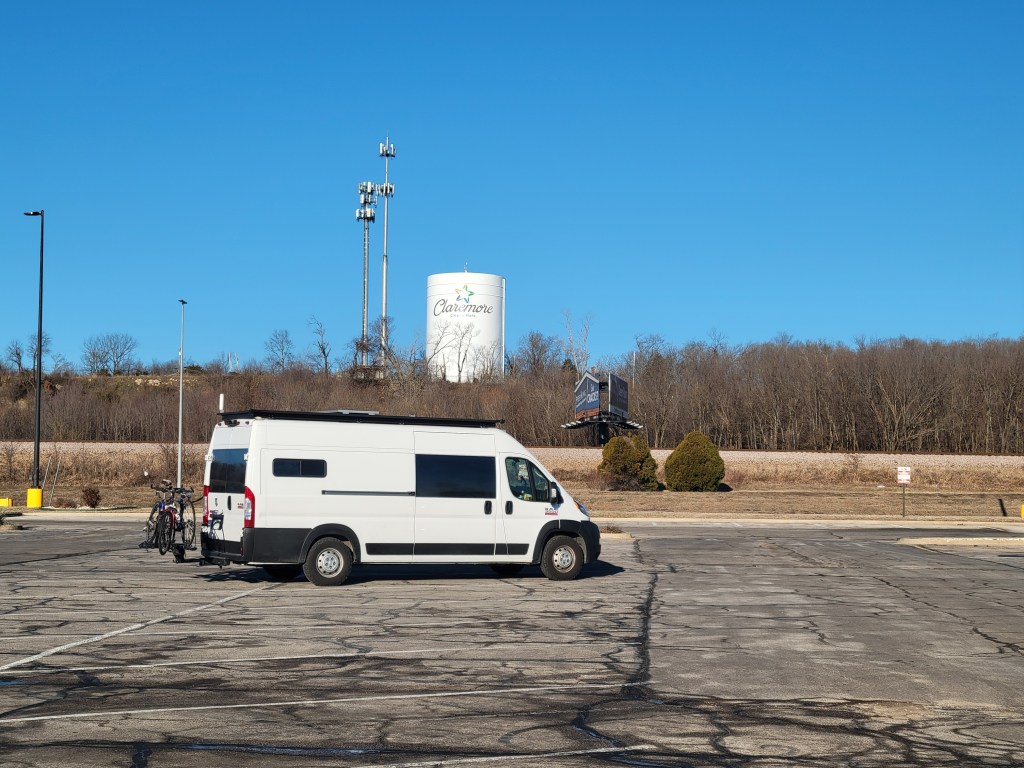
As of the beginning of this writing, we are sitting in a Walmart parking lot in Claremore, Oklahoma where, just on the outskirts of town, the characters that Rodgers and Hammerstein made musical, played out their story of love and courtship amidst a backdrop of Oklahoma’s pursuit of statehood at the turn of the century.
While in the Oklahoma State History museum, a docent recounted to Julie the story of how the song Oklahoma! almost got cut from the musical. He made sure to say how the state of Oklahoma was grateful it was included as it proceeded to make it the official state song. And, it is true, in Oklahoma, the wind sure does come sweeping down the plains. And we felt that wind – especially being here in January during a cold snap – we felt that wind sweep down the plains and jump up and bite us on any exposed skin we left available to it – especially during our Oklahoma 5K in Yukon, a town just outside of Oklahoma City that has a boulevard named after one of its most famous former residents, Garth Brooks.
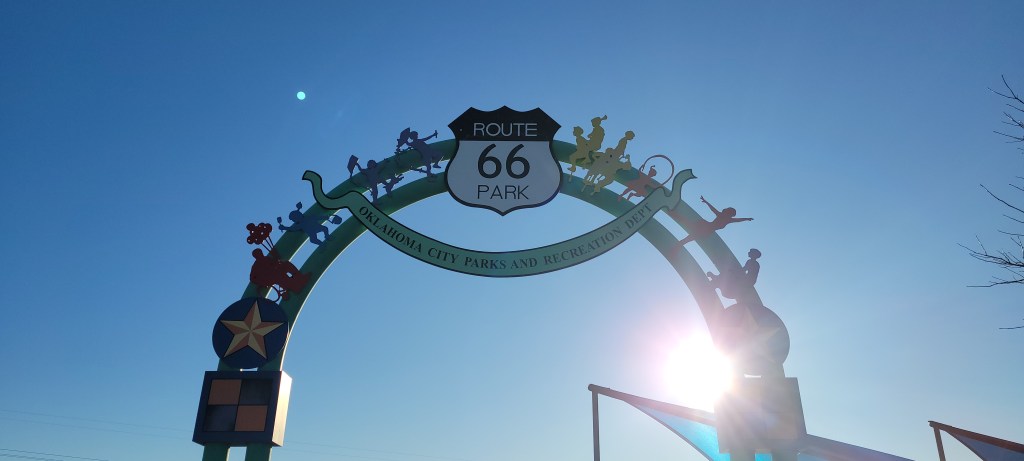
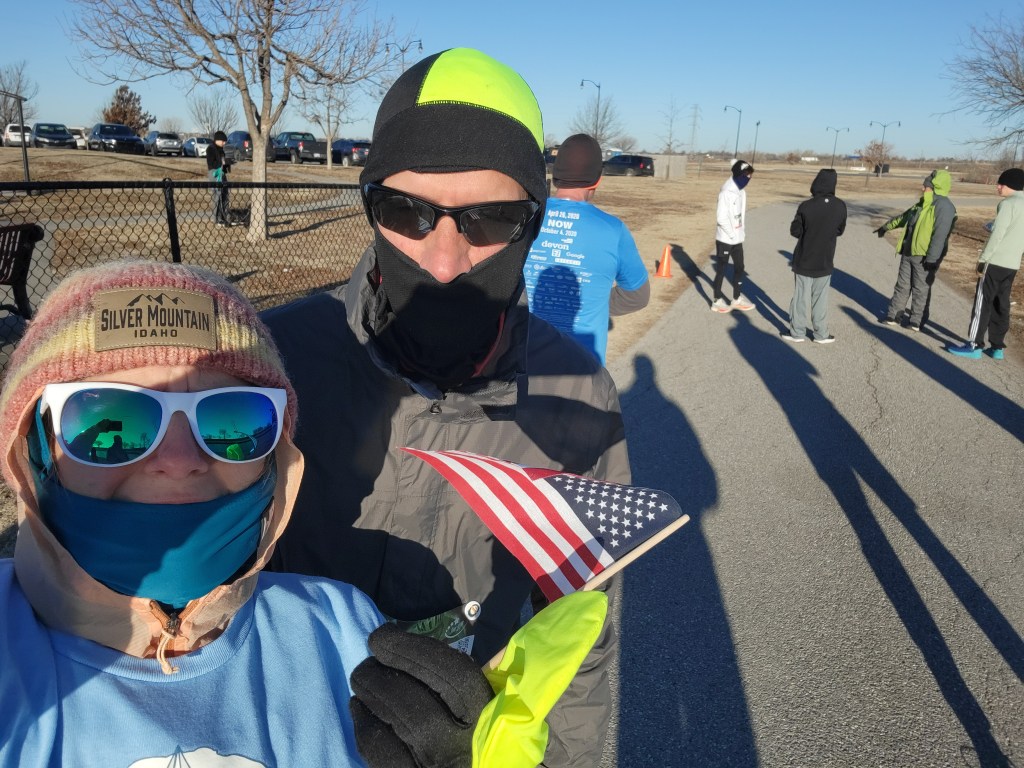
The 5K was aptly called the Freakin’ Freezin’ 5K. You can read about it in our 5K section. Even though we were questioning our sanity when the starting gun went off and our feet felt like frozen blocks, by the time the blood was pumping and our internal heating systems were in full gear, we were able to simply enjoy the beauty of a January morning at Route 66 Park in the heart of Oklahoma. And when it comes to Oklahoma, heart is exactly what we got a lot of.
The further we turn back east, the less the nature of a place strikes us with the kind of slack-jawed awe that many western states inspire, but the more it submerses us in the quiet and soothing beauty of rolling hills, lush greens, and sparkling lakes and rivers.
Though not as mind-blowing, it’s just as beautiful, but in a different kind of way. It’s harder to fully appreciate the natural beauty of the places we are seeing in four season country in January. We didn’t get to see much of the green in Oklahoma, but being from a place that goes through the seasons as well (and with even more extremity than Oklahoma), we could imagine what it looks like when the spring birds start chirping. That said, being as far south as Oklahoma is, the winter does not bring the beauties of a white winter wonderland like back home. The effects of the cold on the trees and the grasses are laid bare to the eye – branches naked, grasses yellowed, and grays and browns abounding. But there was still a glow across the open fields, beauty in the rolling of the hills, and a special shine in the flowing waters that was all more than visible.


The views that were the most striking for us in Oklahoma, however, were to be found in the people and their stories. We left the state affected and impressed by learning stories of a state filled with people that had been tested in many ways and had risen to overcome the brutalities they faced with resilience and strength of heart, spirit, and community. Whether it was through nature’s doing, like the dust bowl or the tornadoes that have torn through the state, or the human instigated tragedies like the terrible Oklahoma City bombing that killed 168 people, including 19 children, and wounded over 700 more in 1995, the 1921 Race Massacre in Tulsa, where the affluent African American Greenwood District was massacred and burned to the ground, or the Trail of Tears that forcibly relocated native peoples, often referred to as the Five Civilized Tribes, from the eastern states to land in what was then the Oklahoma territory, or the Reign of Terror suffered by the Osage Indians, made affluent by their oil claims – recently made more well known in the Martin Scorsese movie based on the book of the same name, Killers of the Flower Moon and more. All over the state, there were stories of people and peoples that had been tested and that came through on the other side vibrant and strong.
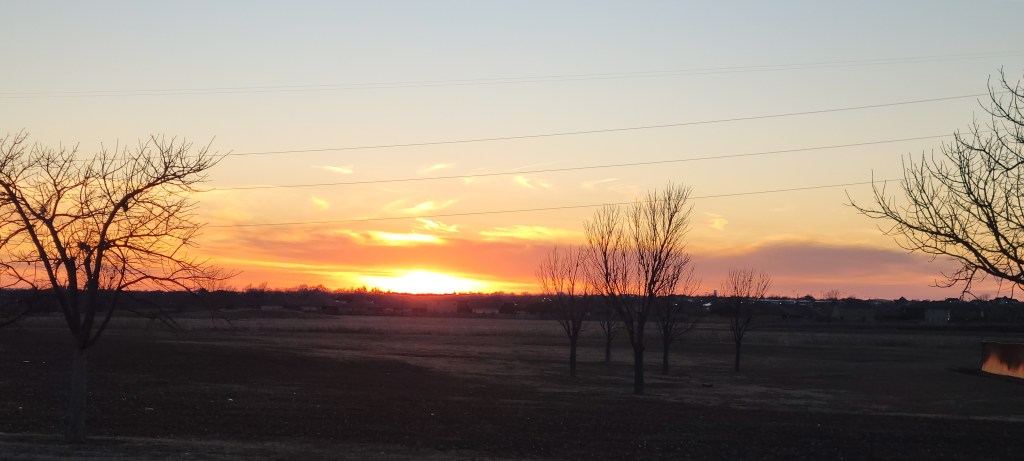
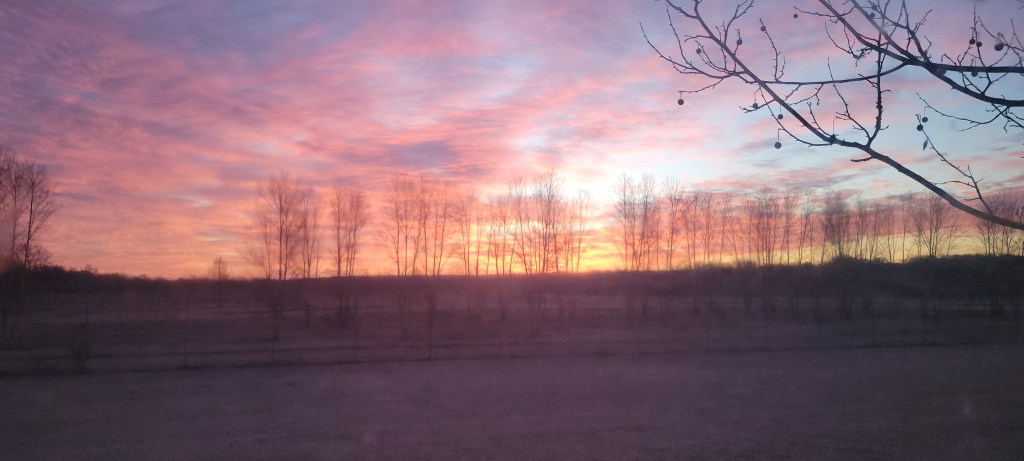
As with every state, there was more of the state that we didn’t see than that we did, but we managed to hit some key spots. We enjoyed gorgeous sunrises and sunsets at Route 66 Park in Yukon, spending the entire day there after our freezing race.
Despite the van being toasty enough for us with the heater on, there were certain nooks and crannies of the van that the heat didn’t get to – and that included one of our water pipes. Thankfully, nothing burst, but enough freezing happened that nothing flowed out of our faucet. So, there were a few days where our water went in and out of use depending on the temperature. Our problems were easily addressed with a little patience and a few jugs of water to bridge the gap.
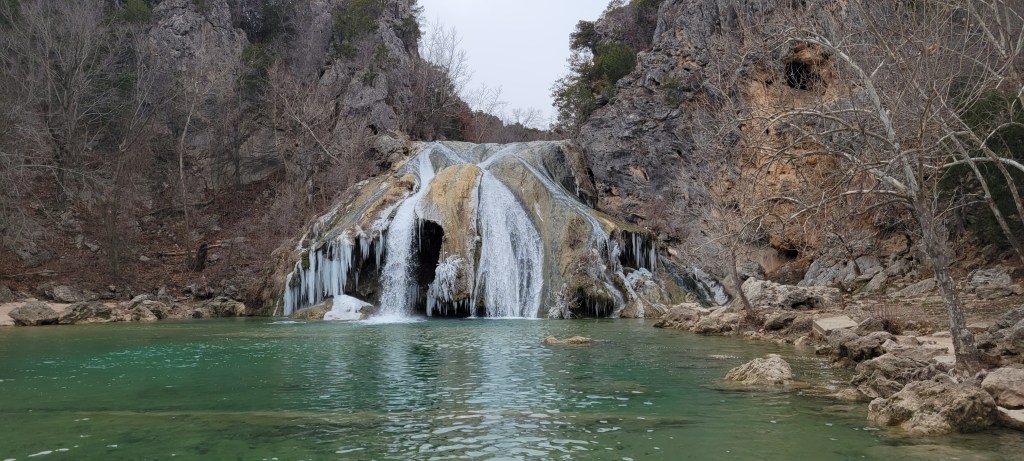
We visited Turner Falls, the largest waterfall in Oklahoma. Being from a state that includes Niagara Falls, the phrase “the largest waterfall in Oklahoma” does not automatically impress. But the beauty of it and the clear blue green swimming hole below it is what made Julie eager to come back in the warmer months. Julie desperately wanted to have her Oklahoma swim in those crystal clear waters, but also didn’t want to die of hypothermia, so we got her swim in at the Claremore Rec center instead.
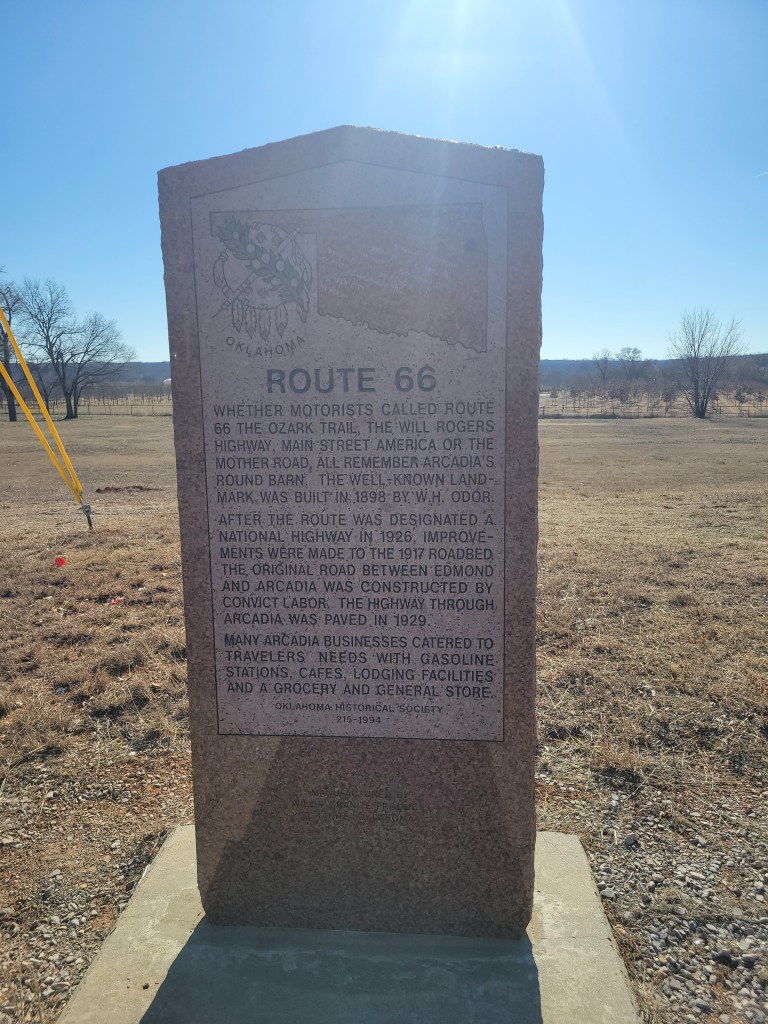
Oklahoma has a greater share of the famous Route 66, the “Mother Road” than any other state that has a piece of it, and we managed to hit a good bit of it.
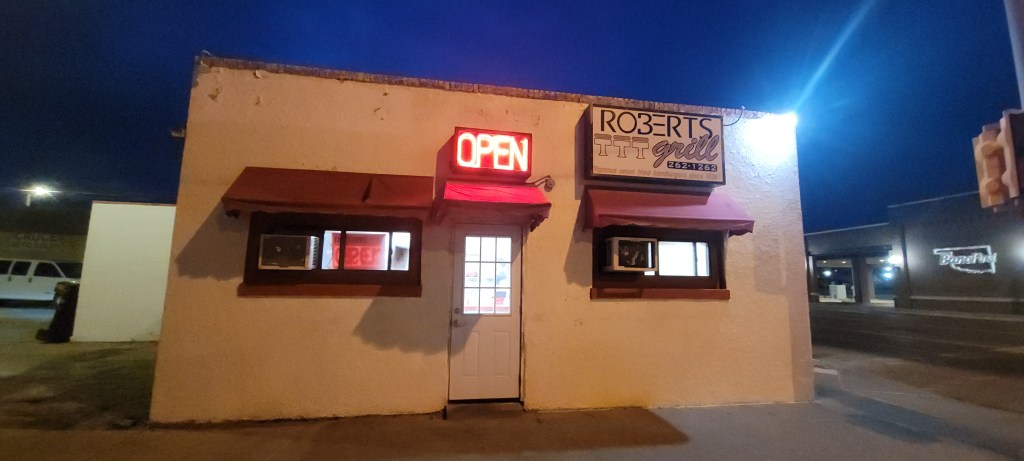
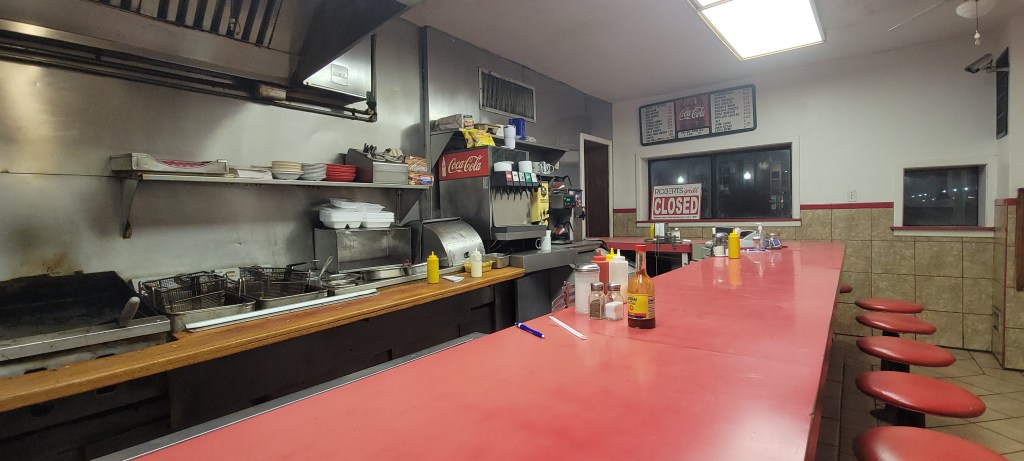
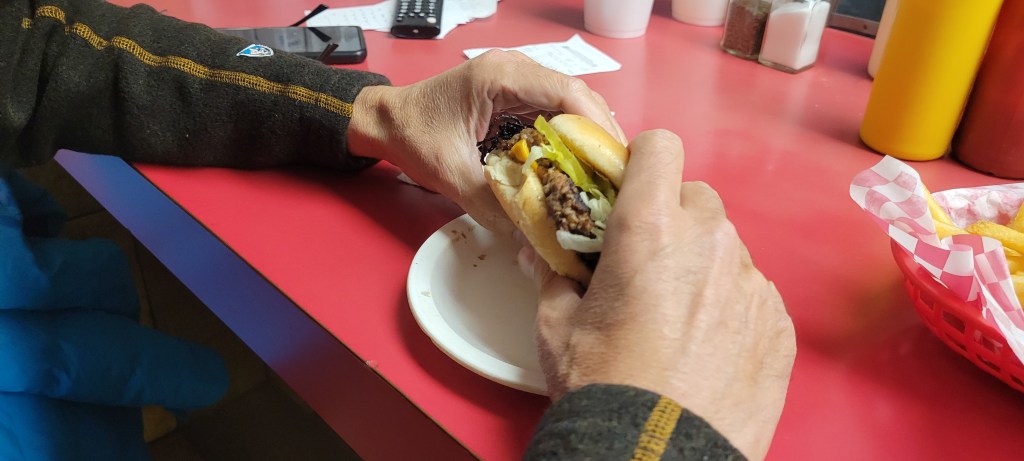
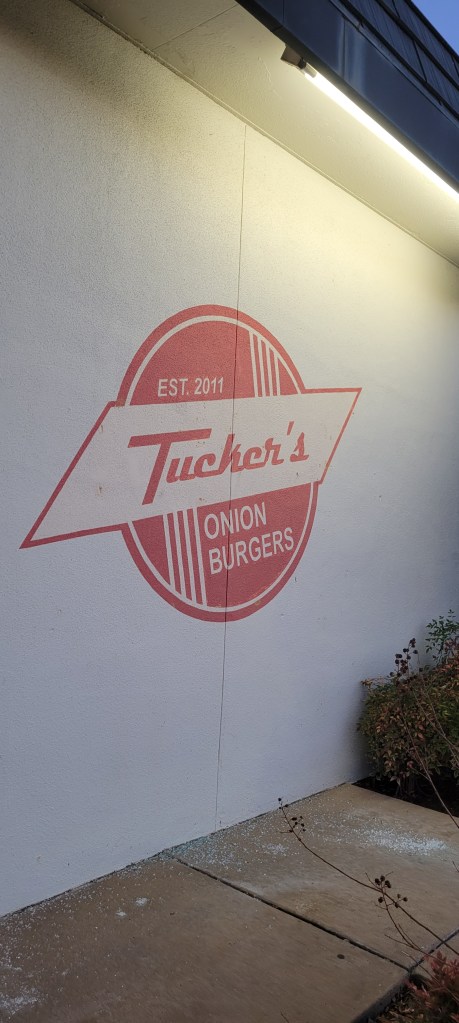
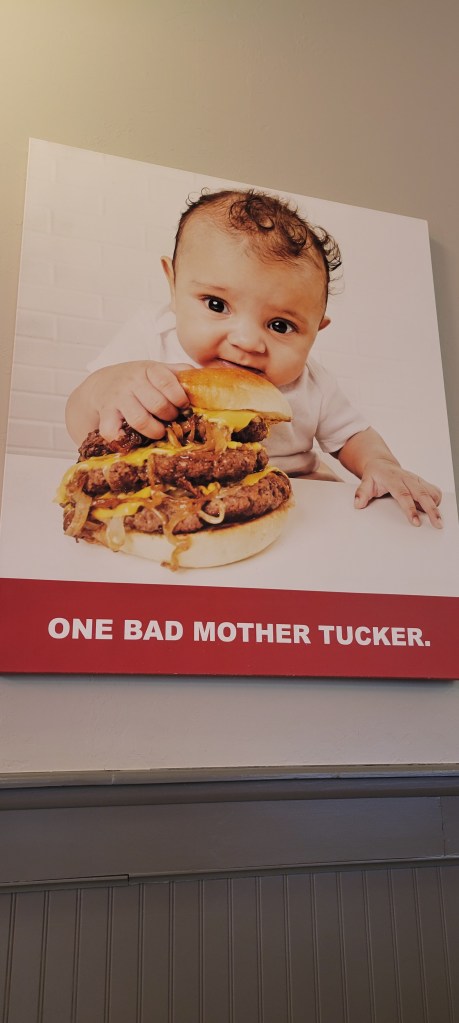
One such stop was El Reno, just outside of Oklahoma City. We had to get an Oklahoma onion burger, not just because it sounded (and WAS) delicious, but because it is a regional cuisine, and one with an interesting history. It was invented during the Great Depression as a way to save money on meat by using smaller portions of beef and larger portions of onions, which get caramelized and smashed into the burger. We stopped at the oldest of the three famous spots in El Reno that make them, Robert’s, still going since 1926. We we grabbed another one (this time, Julie went for the turkey burger version) at a local joint in Oklahoma City called Tucker’s.
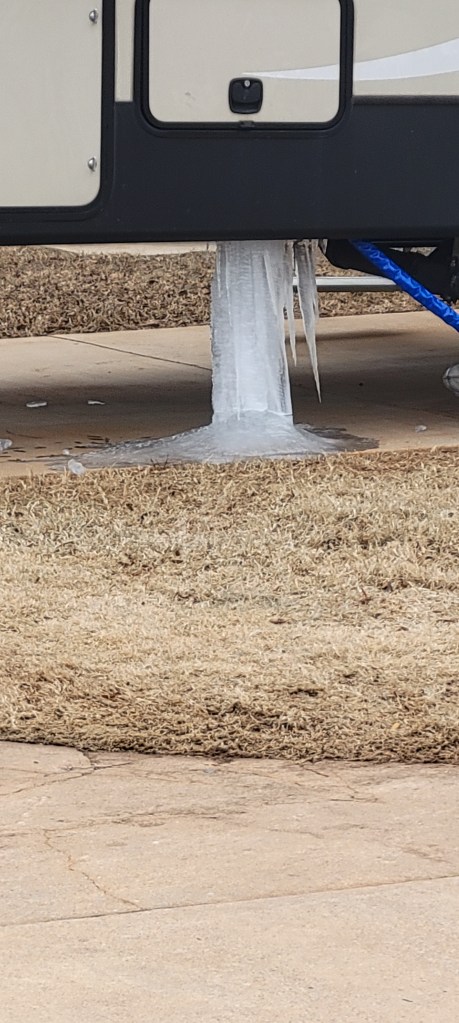
We stayed the night in an RV park just outside of Oklahoma City where Julie had a great chat with the gentleman in the office – a former bobsledder that knew Lake Placid and was the first para-athlete to do the bobsled push off. He shared with Julie all sorts of fascinating information about bobsledding that Julie tried to remember for a People Along the Way post, but the cold seemed to have frozen her neurons’ capacity to retain details. It was so cold that one RV that had clearly been emptying some water learned the hard way that the weather wasn’t on board.

We went to the Oklahoma City Memorial, originally thinking 30 or 40 minutes would be plenty of time for the pilgrimage to pay our respects. When we arrived, we found not only a profound and beautiful memorial to the tragic events of April 19th, 1995, but a truly remarkable museum experience. The museum did such a wonderful job of immersing the visitor in the experience of what tragically happened in this town that we missed our planned 11:00 AM capitol tour and had to rush out of there two hours later to make the 1:00 PM. It is an intimidating task to write about the experience because we are aware our words couldn’t possibly do justice to the event that occurred, the inspiring way that Oklahomans, and people around the country, responded, and the poignant beauty and pain that is memorialized there today. There is a fence outside the memorial where people are still hanging mementos for those that senselessly lost their lives there 30 years ago. One woman had posted a laminated letter to her mother with updates on her family and children’s lives, expressing the hole left in their lives that is just as raw and open 30 years later. The museum and memorial was remarkably well done and left us affected.
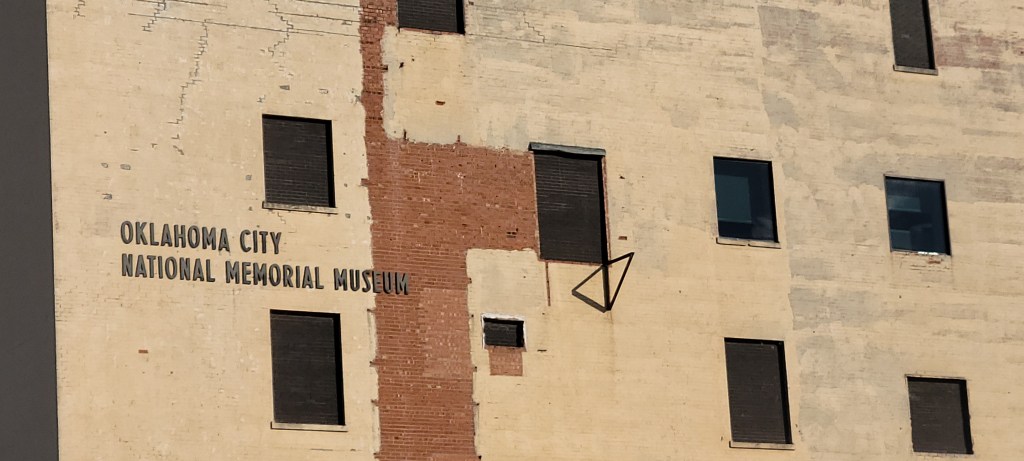
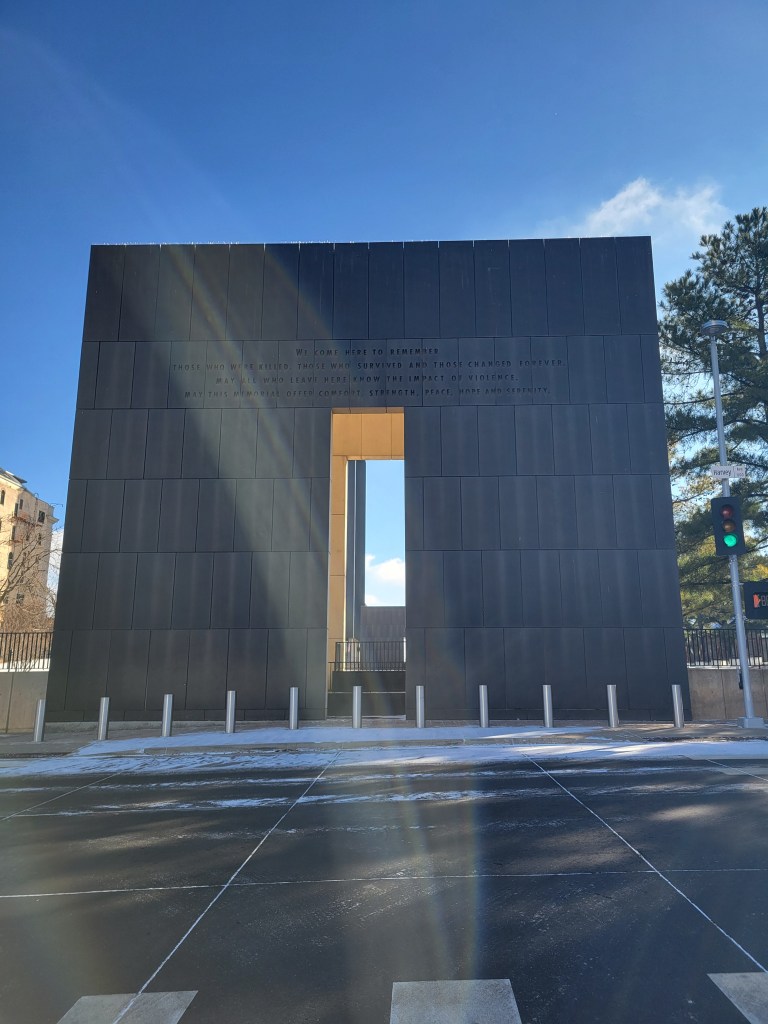

We later learned during our tour of the capitol building that the coach of the Oklahoma Thunder, the NBA team that Oklahoma City got after so generously hosting their Louisiana neighbors after the tragedy of Hurricane Katrina, makes his players tour the museum and memorial so they are clear who they are playing for.
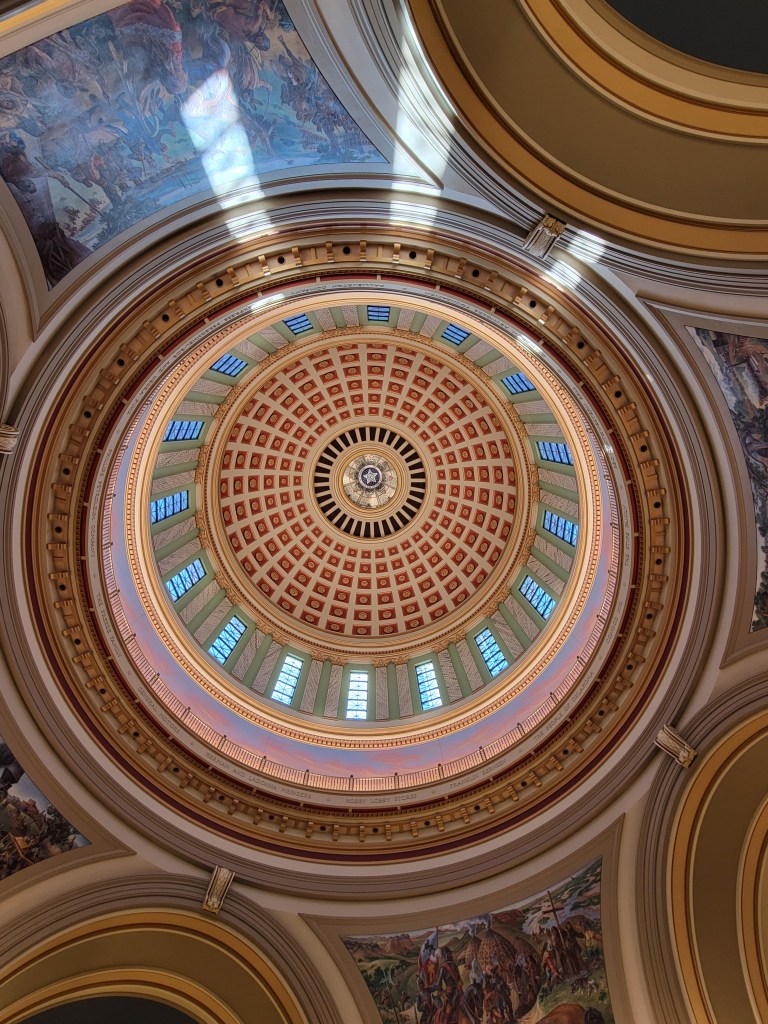
Our tour of the capitol was filled with awe at the tremendous art that filled its halls and the vibrant colors that shone within its capitol dome. We enjoyed our docent that gave us a tour and told us how she is 3/32nd Cherokee, and how that is made official by her ancestors’ signing of the Dawes Rolls generations ago. We also struck up a great conversation with her and two other tour attendees, one of whom you can read about in our People Along the Way section.

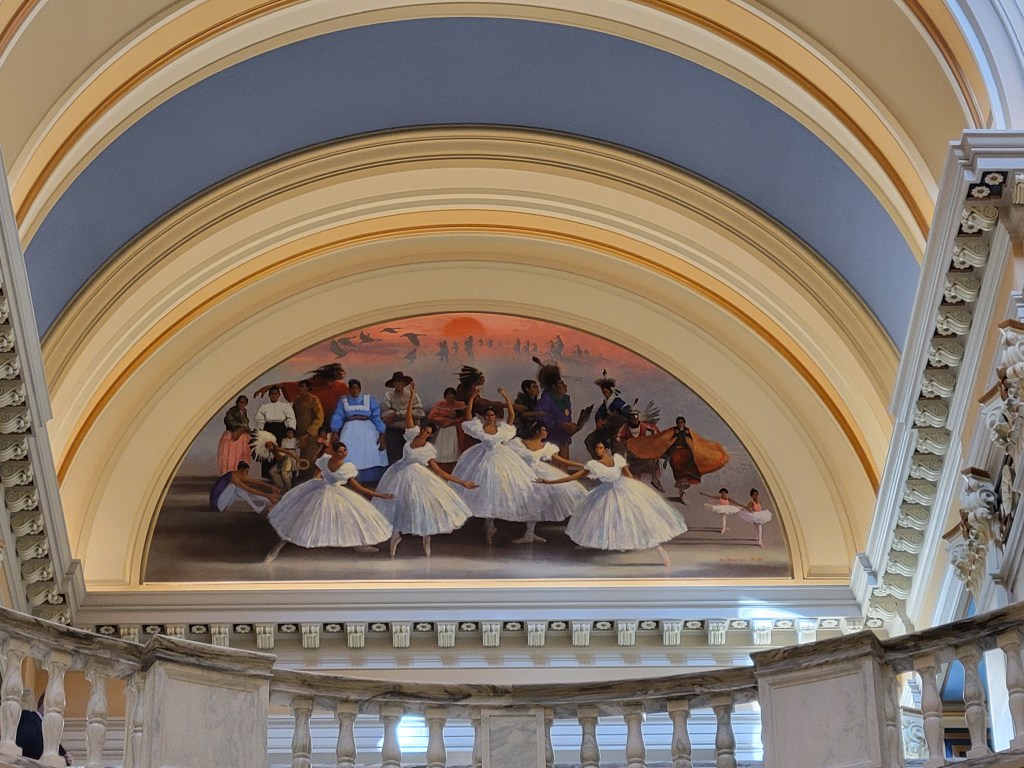
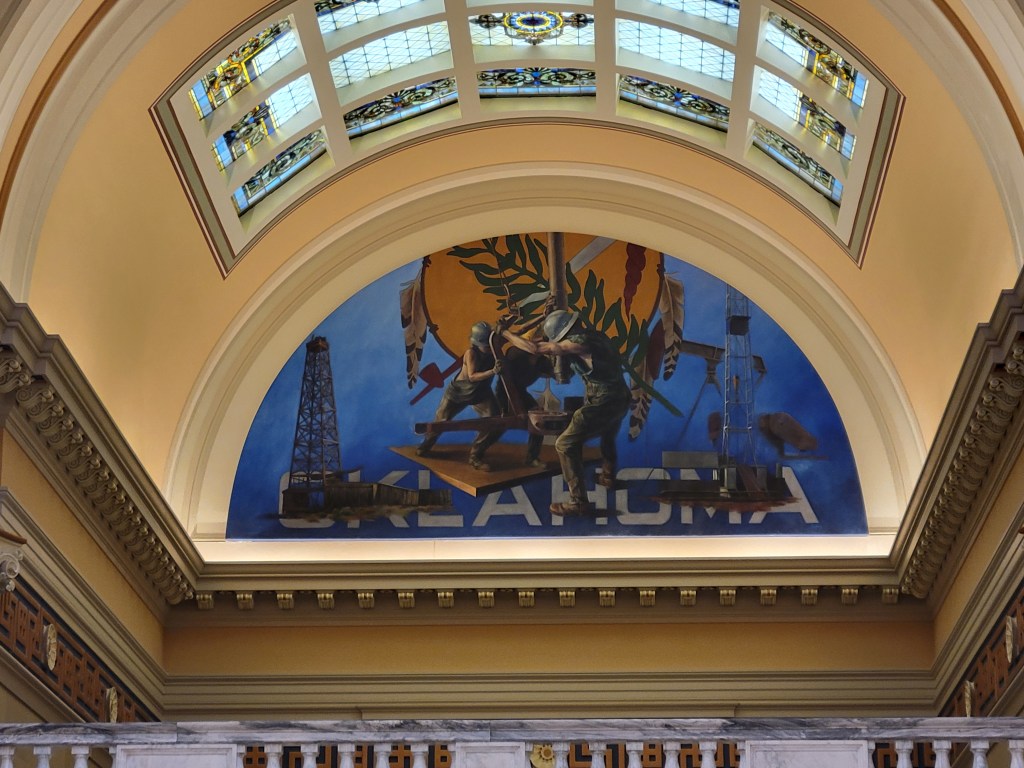

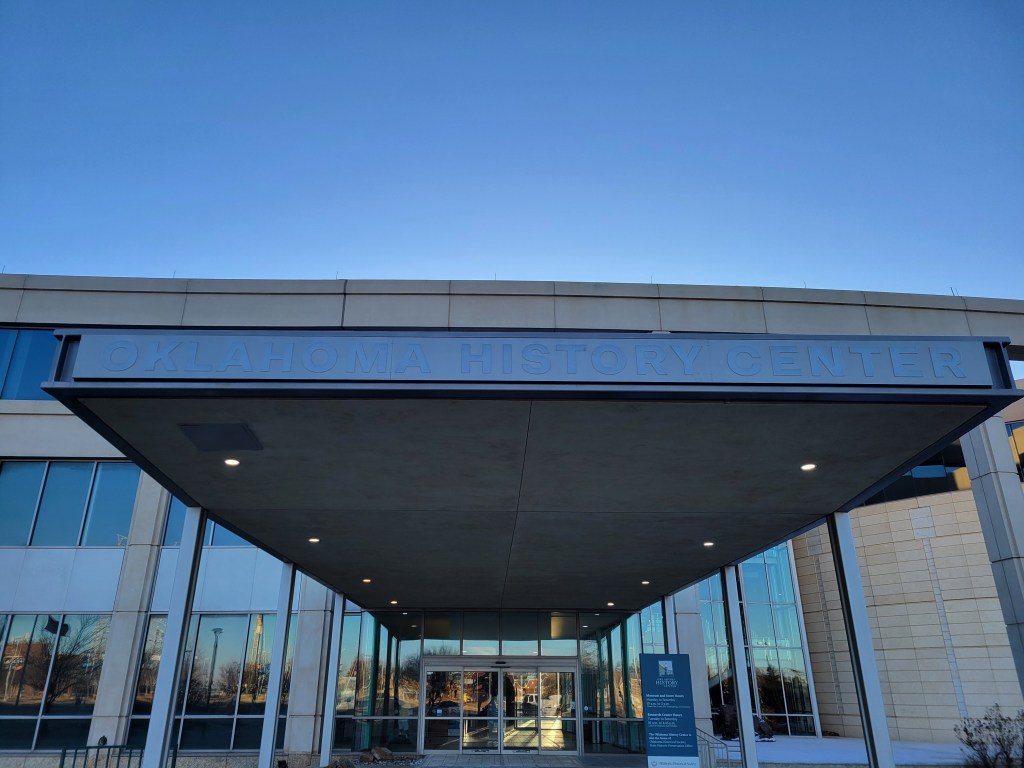
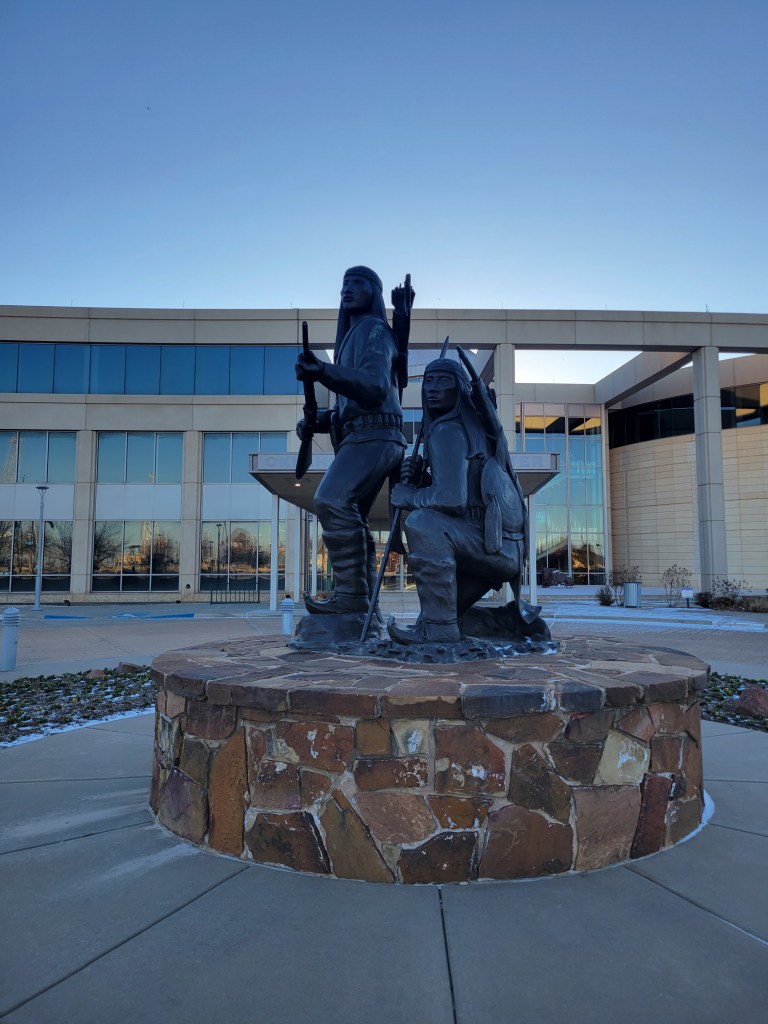
There is a certain kind of tired that accumulates from sight-seeing and museum viewing. It is not the physical kind of tired that lots of exercise can produce, nor the kind of weariness that many hours at the wheel can bring on. It’s a kind of tired that comes from the fire hose of information and visual input that we try to absorb into our brains. There comes a point in the day when we just can’t stuff anymore information in there. Julie was feeling filled to the brim by the time our capitol tour was done, but was insistent on getting through the Oklahoma History Center Museum, at least a little bit. With only an hour left until closing, the woman at the front desk graciously let Julie in at no cost. In that hour, Julie did what she could to absorb the bounty of information about Oklahoma’s entrepreneurial history, oil and gas history, space exploration history and native peoples’ history. Though she may have only absorbed about 30% of what she read, and only managed to read about 15% of what was there to read, she left feeling just a touch more educated about what makes Oklahoma what it is today.


We stopped in Arcadia on Route 66 to see its famous round barn and had a great time chatting with the volunteer at its gift shop. You can read about our chat with Andrea in our People Along the Way section.

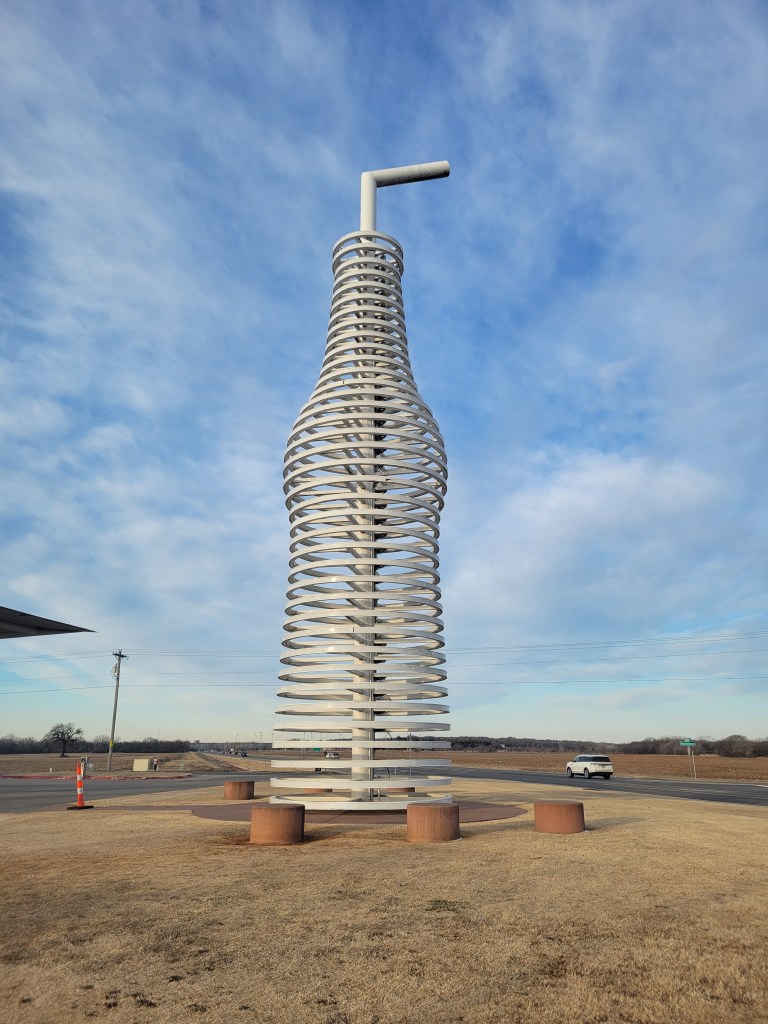
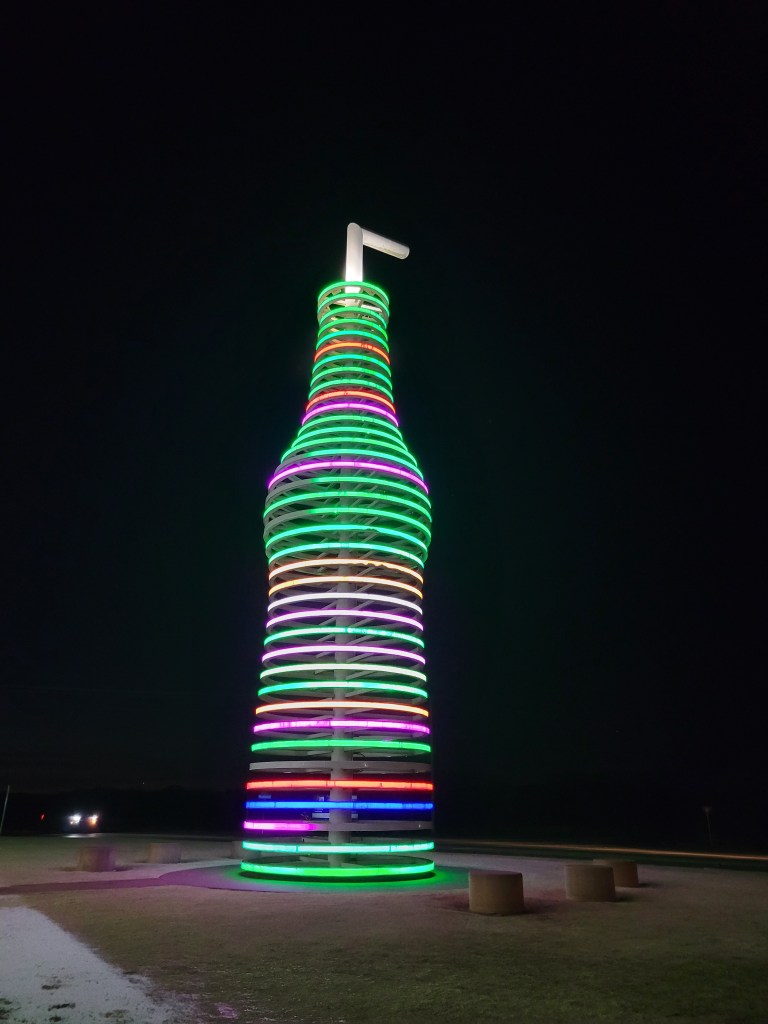
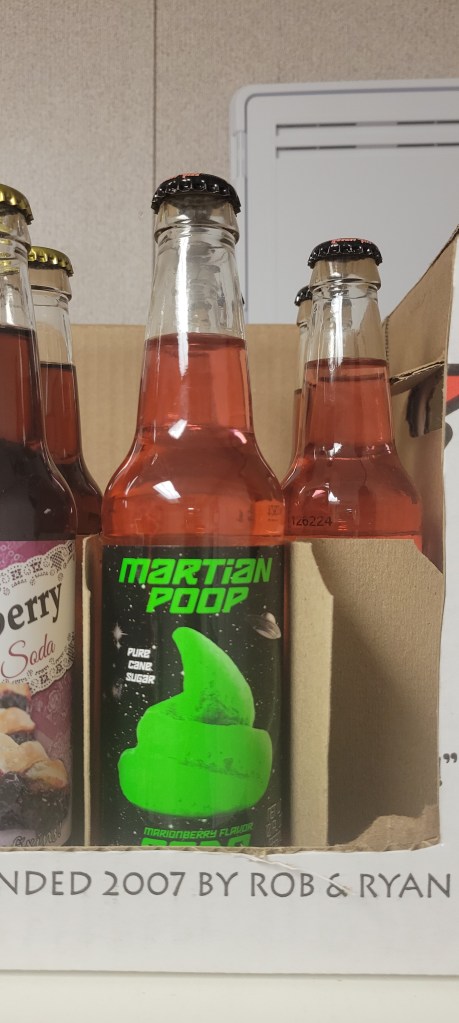
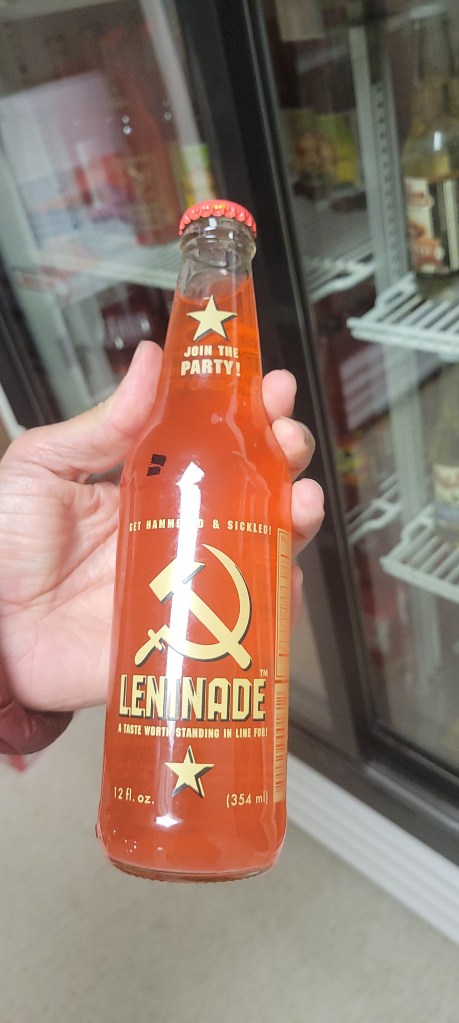
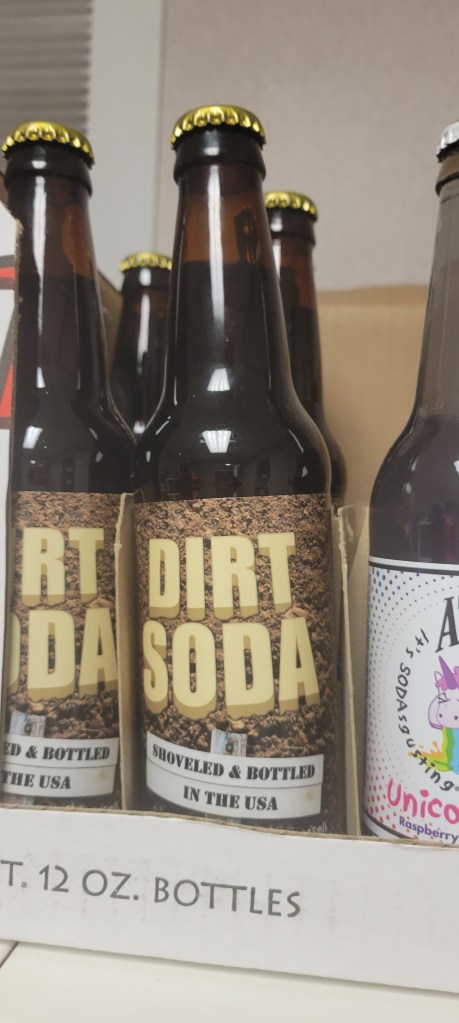
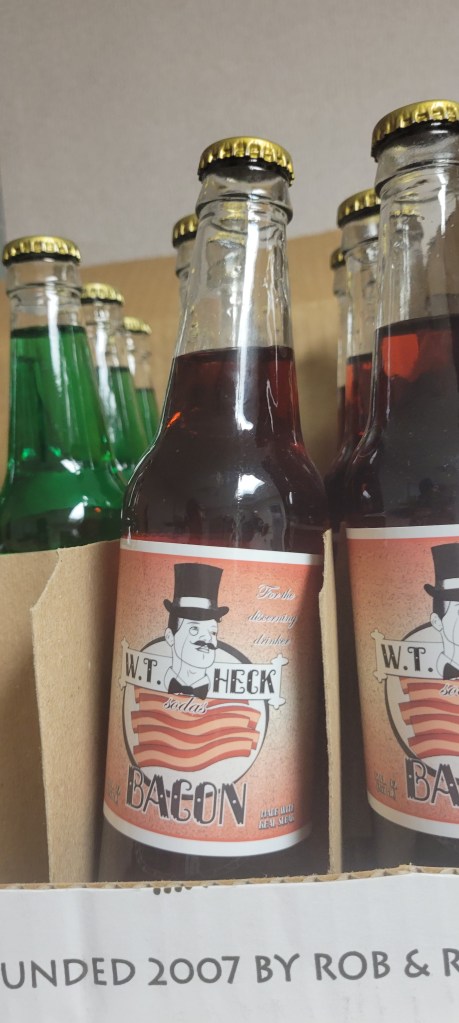
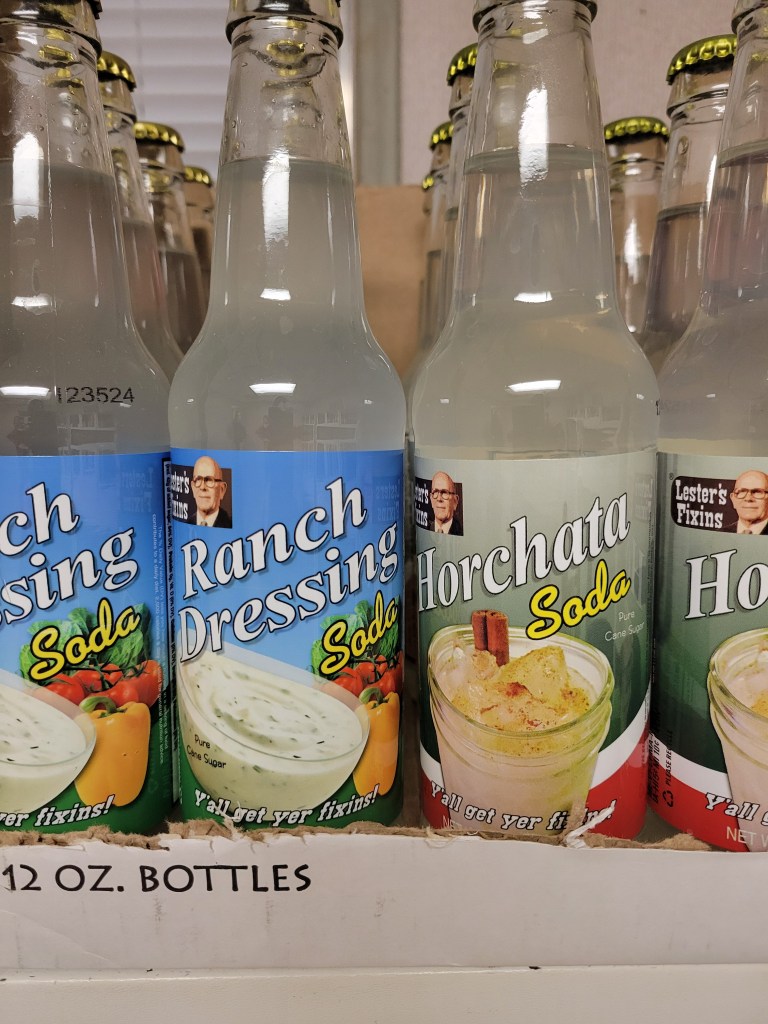
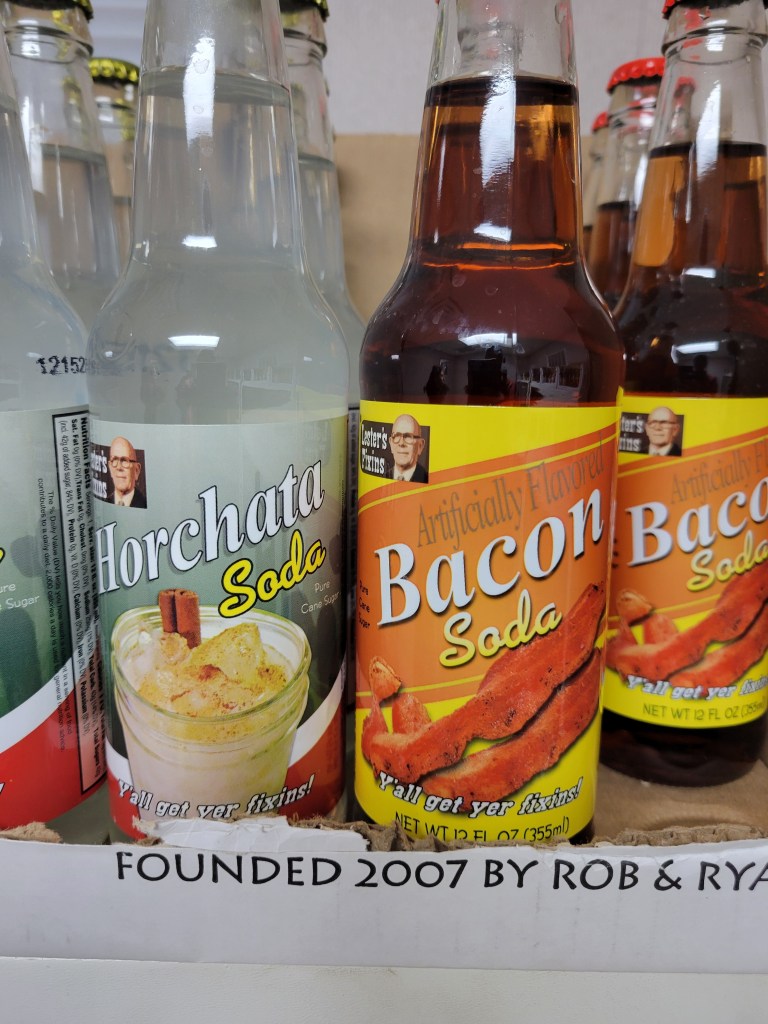
We stopped by Pop’s, a locally famous spot that has over 600 flavors of soda, ranging from classics like root beer, but lovingly called, Dang! That’s good Root Beer, to the more adventurous Ranch Dressing Soda (which we heard was delightfully disgusting), Dirt Soda, and Martian Poop Soda. We learned that the store was not named for soda pop, but for the owner’s father.

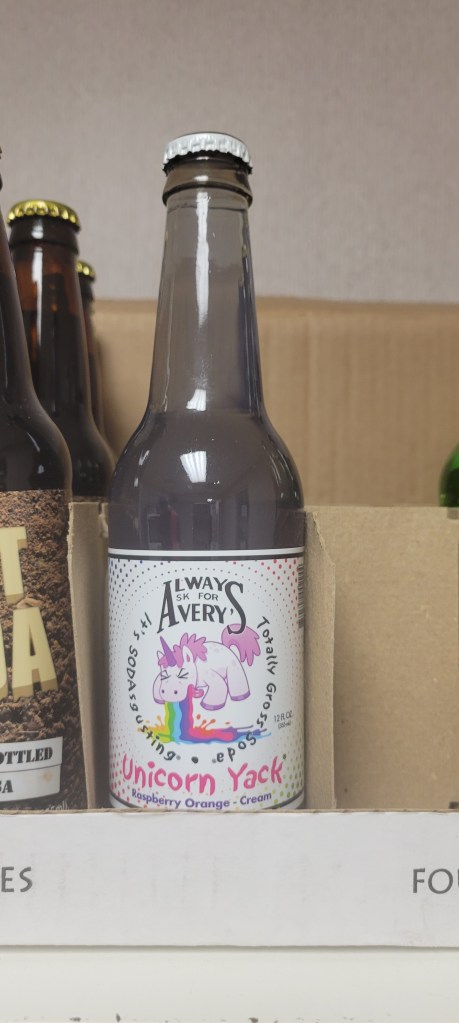
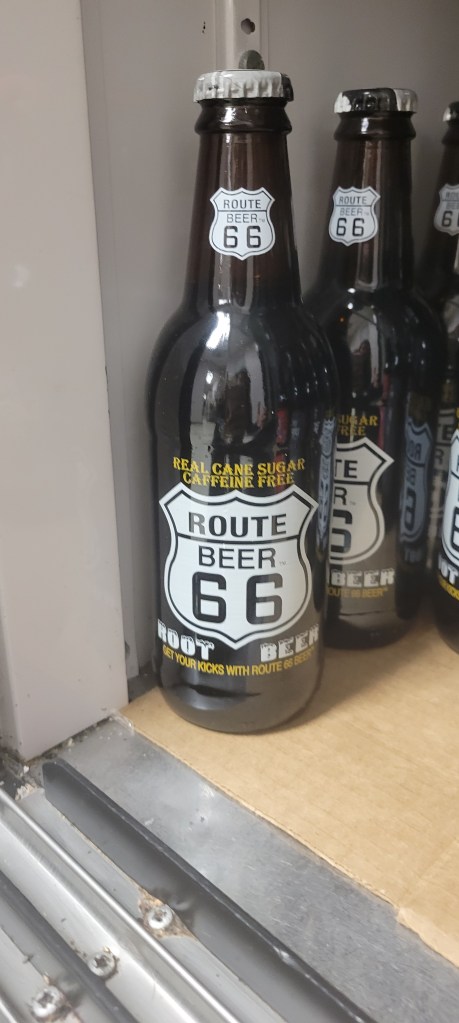
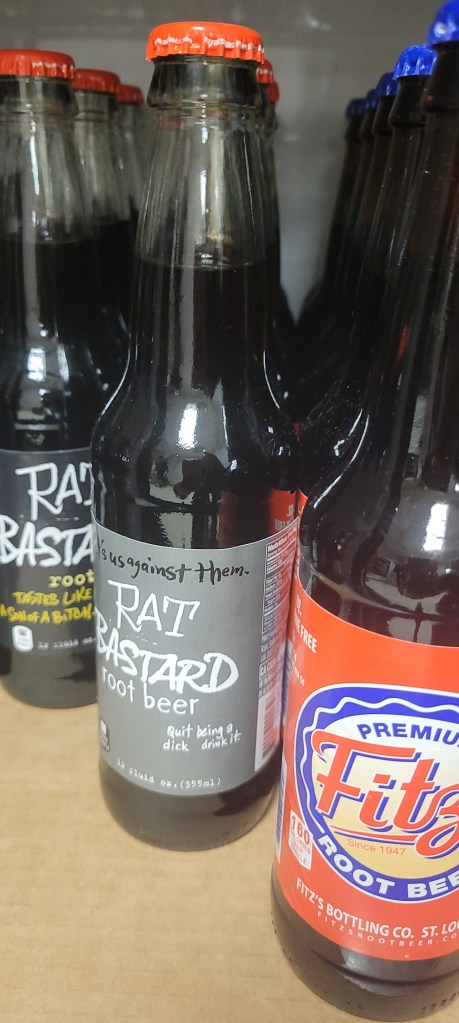
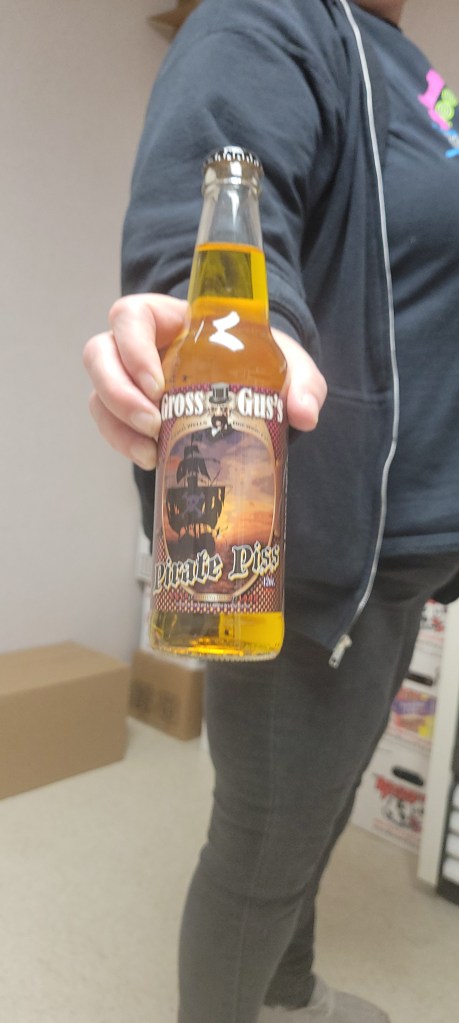
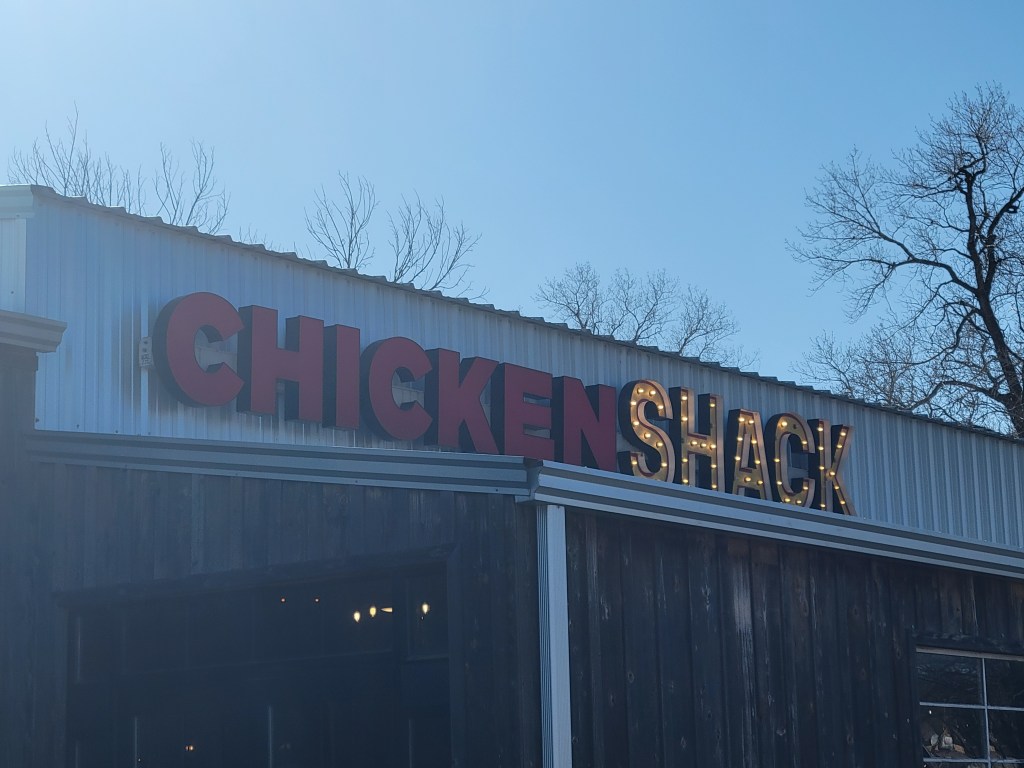
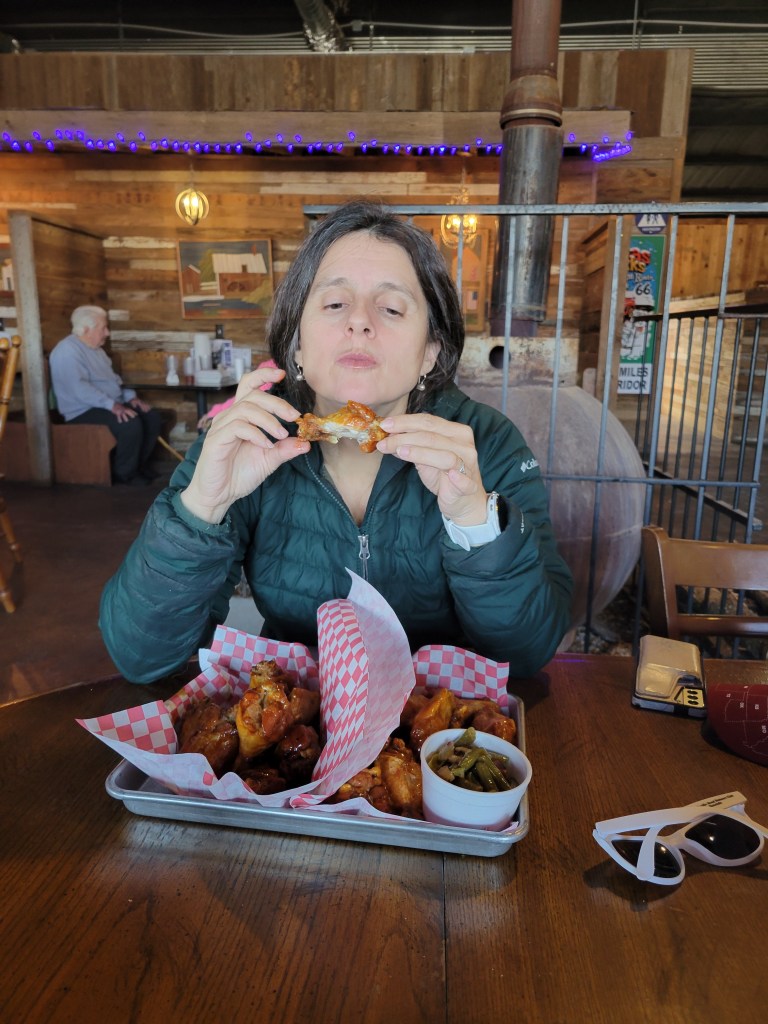
After cashing in on a 20 chicken wings for $20 deal at the Chicken Shack and trying out some Broasted Chicken, we continued on with our adventures east on historic Route 66 as we made our way to Tulsa.
We passed a sign that commemorated where Paul McCartney stopped to ask for directions when he and his girlfriend took a trip down the famed Mother Road.

We took in the history of the 1921 Tulsa Massacre at the Greenwood Rising Black Wall Street History Center before heading north to make our home in the Claremore Walmart parking lot for the night.

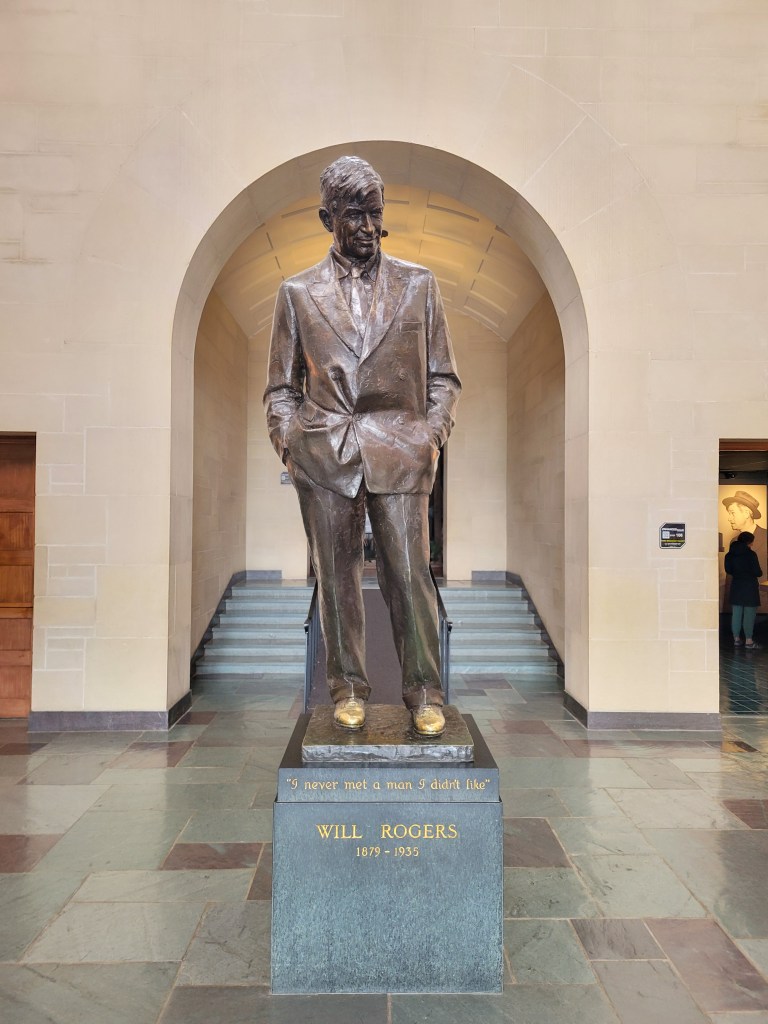
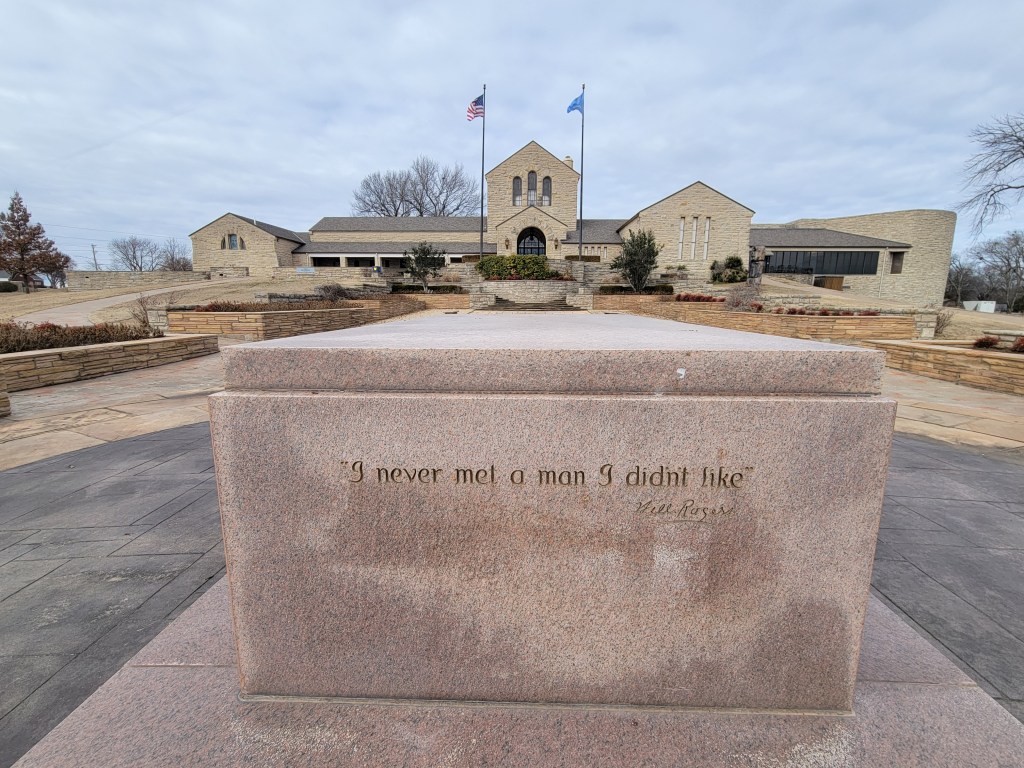
Our last few stops in Oklahoma included the Claremore Rec Center, where we both partook of the indoor running track and Julie did a very mini indoor triathlon, and the Will Rogers Museum.

At the risk of sounding like a broken record, we left Oklahoma with so many sites unvisited. Still, we got enough of Oklahoma to gain an appreciation for the place and the people that live in it. We definitely are on board with “saying, you’re doing fine Oklahoooomaaa”! We met good folks at every turn, ate delicious food, and got lost in the bucolic serenity of the rolling hills and the open plains. We felt relaxed in Oklahoma and found ourselves in no hurry to leave. The clock was ticking, though, and the itinerary beckoning us onward.
 R and J in the USA
Leave a comment