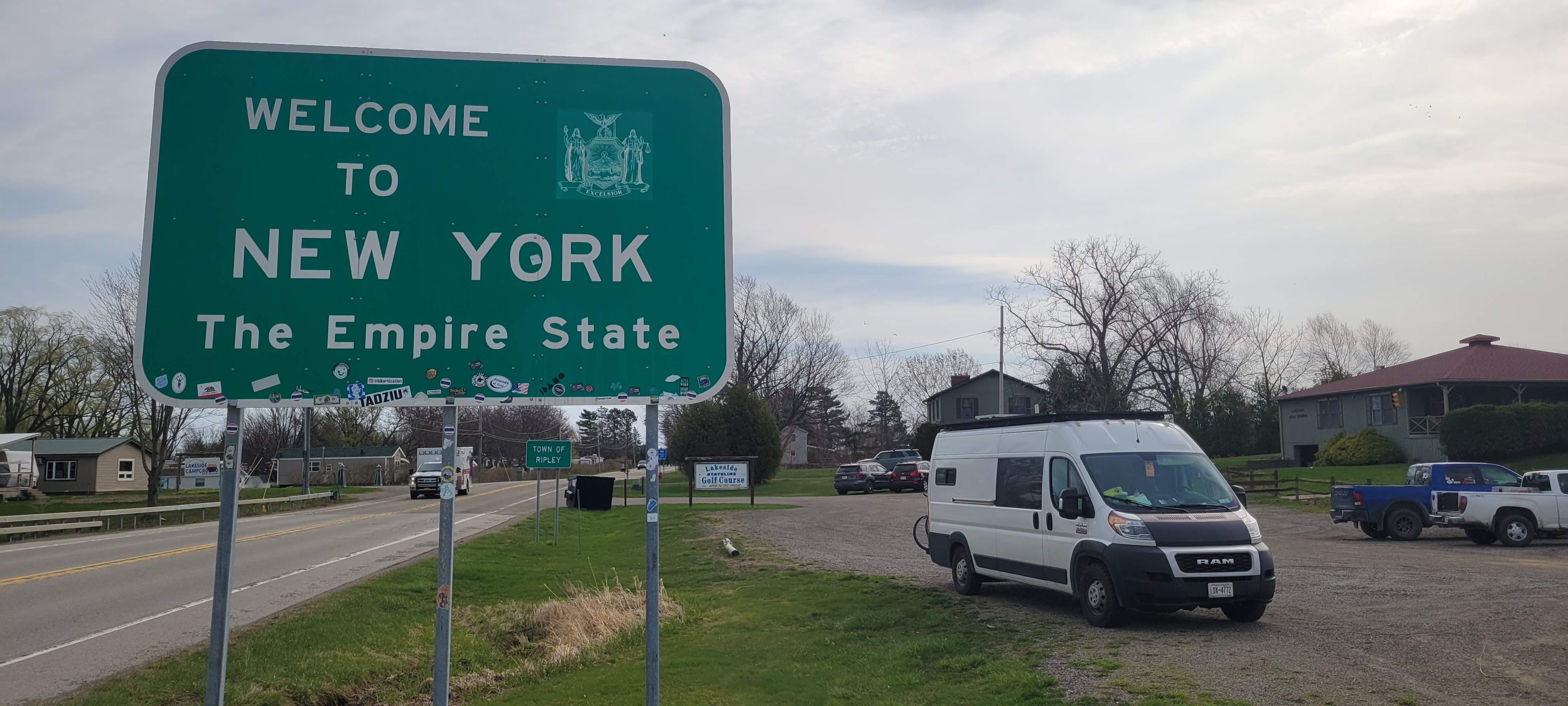

“Out for a morning walk?”
“Yeah. It’s my first time here,” Ryan replied.
“Where are you from?”
“Rochester, New York.”
“Wow. Are you just passing through?”
“Yeah. My wife and I are on a 50 states tour. That’s our van over there.”
“I saw that. I noticed the New York plates and wondered if it was something like that. I keep saying I should get something like that, or a little bigger, because my wife won’t go camping with me in a tent. Do you know about this place?”
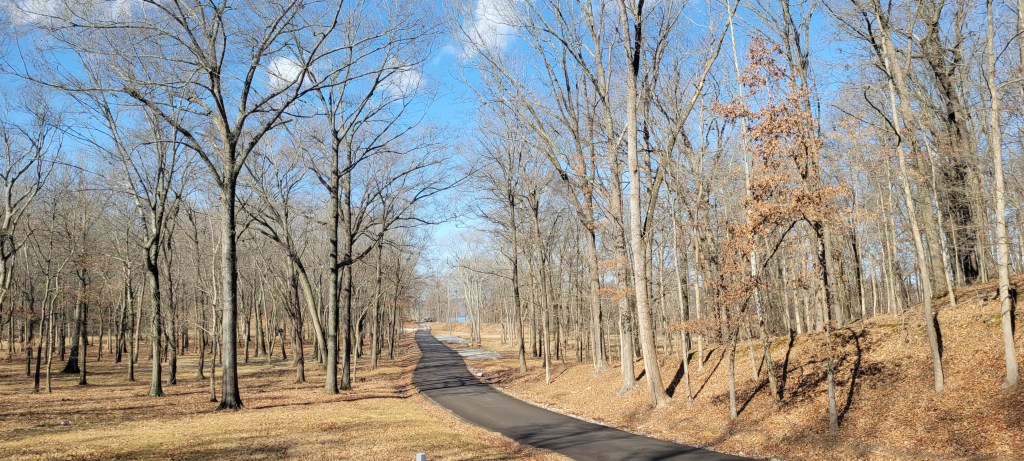


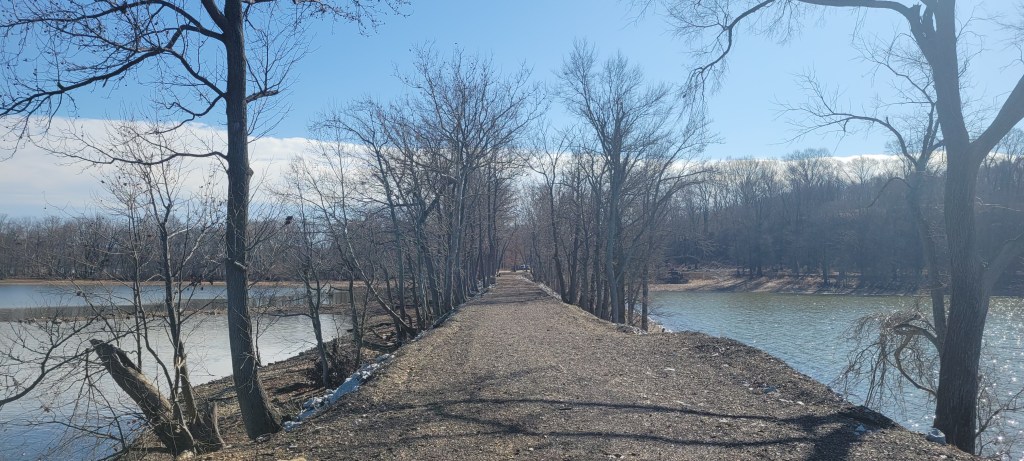
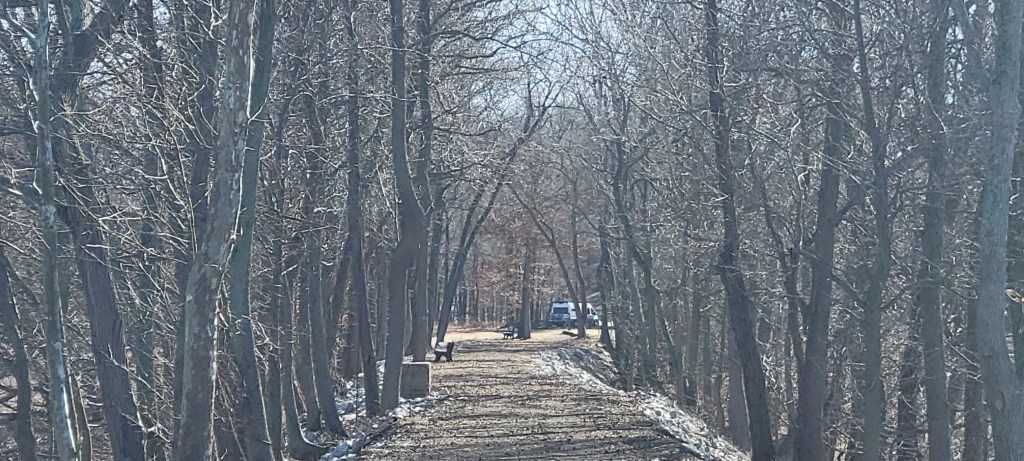
This place was Johnsonville State Historic Park, located about sixty miles west of Nashville. Nestled on the eastern shore of Kentucky Lake, a dam-formed lake on the Tennessee River, it was designated a historic park for its Civil War history. Ryan was soon to learn there was more to the site’s past than that.
“I know it’s a Civil War site,” Ryan replied to John (we think that’s his name). “But I don’t know the details of it.”
John, a middle-aged man of average build with a friendly manner and a relaxed face under a gray baseball cap, gave Ryan an overview of the site’s Civil War past.
“This is a Union site. Across the river, Nathan Bedford Forrest snuck his troops up on the ridge and fired artillery at the Union ships and sunk a bunch of them. They burned. It was a chain reaction because they were so close together.”
John bridged the gap between then and now.
“The river wasn’t this wide back then. They dammed it to prevent flooding and save people when the water came through. They don’t like to talk about it, but people used to come and take things off the Union ships. I know this because my grandfather told me about it. The ships were still in the river before they built the dam. They’re still there, but now they’re underwater.”
He then went further back into the site’s history.
“There were Archaic societies here 5,000 and 10,000 years ago. Across the river over there is a known site of an Archaic society. They’ve found lots of relics from it.”
John’s interest in the area’s human history goes beyond knowledge. He likes to dig into that history – literally – and hunt for artifacts of early civilizations. This involves some strategy.
“You’re not allowed to take rocks from there (the site across the river). I used some deductive reasoning. I figured the streams would carry things away from the site, so I started looking around the streams near the edge of the site.”
That strategy paid off.
“I’ve found a bunch of Archaic rocks over there. I’ve found some carved into images of animals. I found an artifact that was shaped into an animal. It was made of forged metal. I took it to an anthropology professor at the University of Tennessee. He said it was priceless, and that I should give it to the Smithsonian. I’ve found other metal ones. I cheated a little bit. I was using a metal detector for those.”
He gave Ryan a tip for finding artifacts.
“You can find things on this side of the river, too. If you walk near the river and see a rock that looks a little bit different, take a closer look at it.”
Artifact hunting was just one of John’s pursuits in the area.
“Today I’m looking for chert rocks to make arrowheads from.”
He told Ryan about the arrowhead-making process.
“You find a chert rock. Then you find a pounding stone, about the size of a fist. You stand the chert rock on its edge, and you hit it with the pounding stone to split it. Then you take one of the split halves and split it again.”
He mimed the process as he went.
“The idea is to get a flat piece of shiny rock to make an arrowhead from. Then you chip away at it to shape it and give it a point and sharp edges. I’ll probably find one this morning. If you’re still here when I come back around, I’ll show you.”
As he returned to his car an hour later, John showed Ryan an arrowhead he had begun fashioning out of a rock he found. He had already split an arrowhead form out of the center of a rock. He explained the process to Ryan as he chipped away at the form to sharpen its edges.
“I make them all the time. I’ve also found lots of them here. If you walk around and keep your eyes open, you might find an arrowhead.”
John shared stories of the site, his artifact hunting, and his arrowhead making with the comfortable enthusiasm of a friend. In that sharing, he revealed that his digging in the dirt went beyond satisfying intellectual curiosity.
“It helps settle my mind.”

 R and J in the USA
Leave a comment