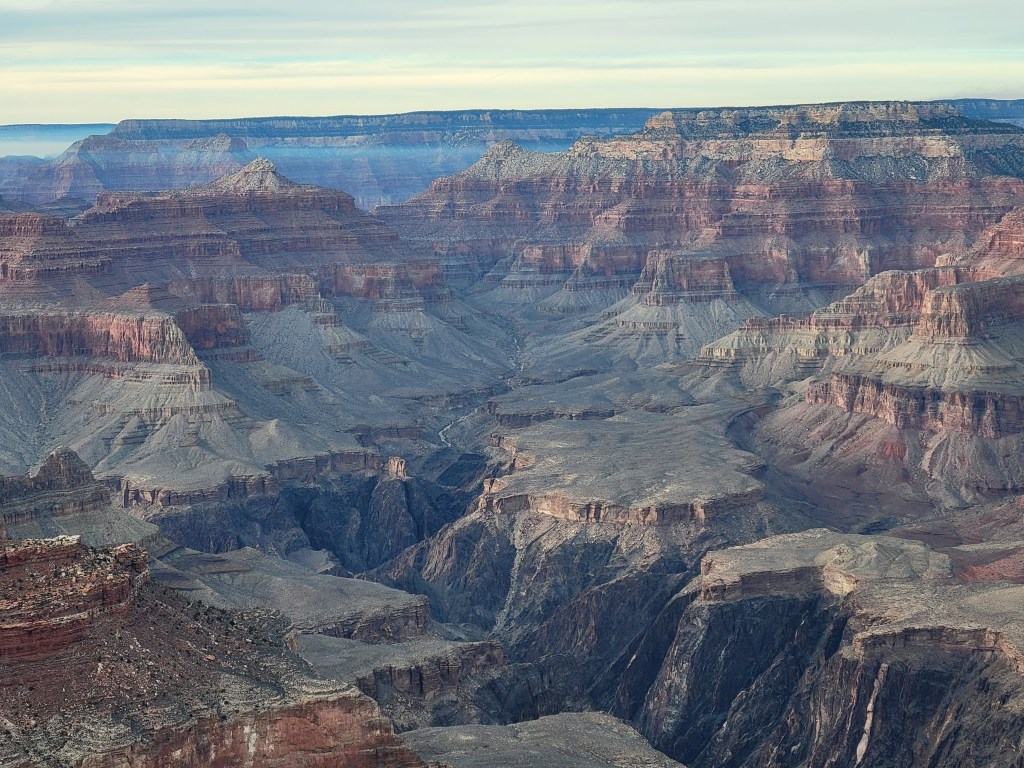
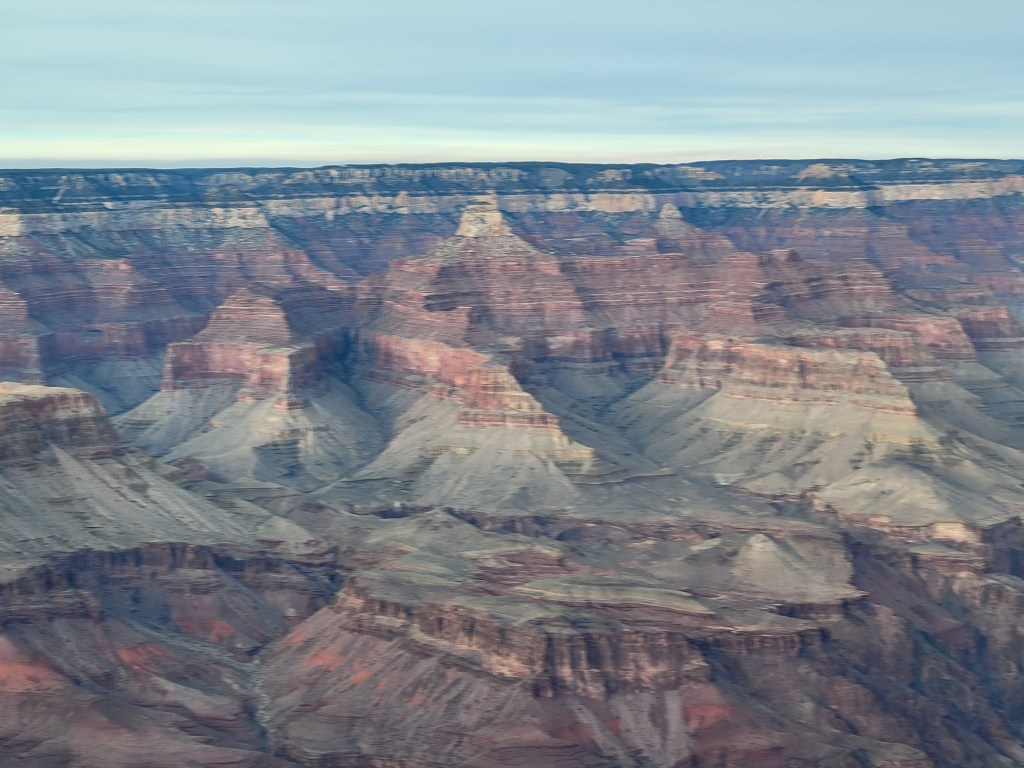
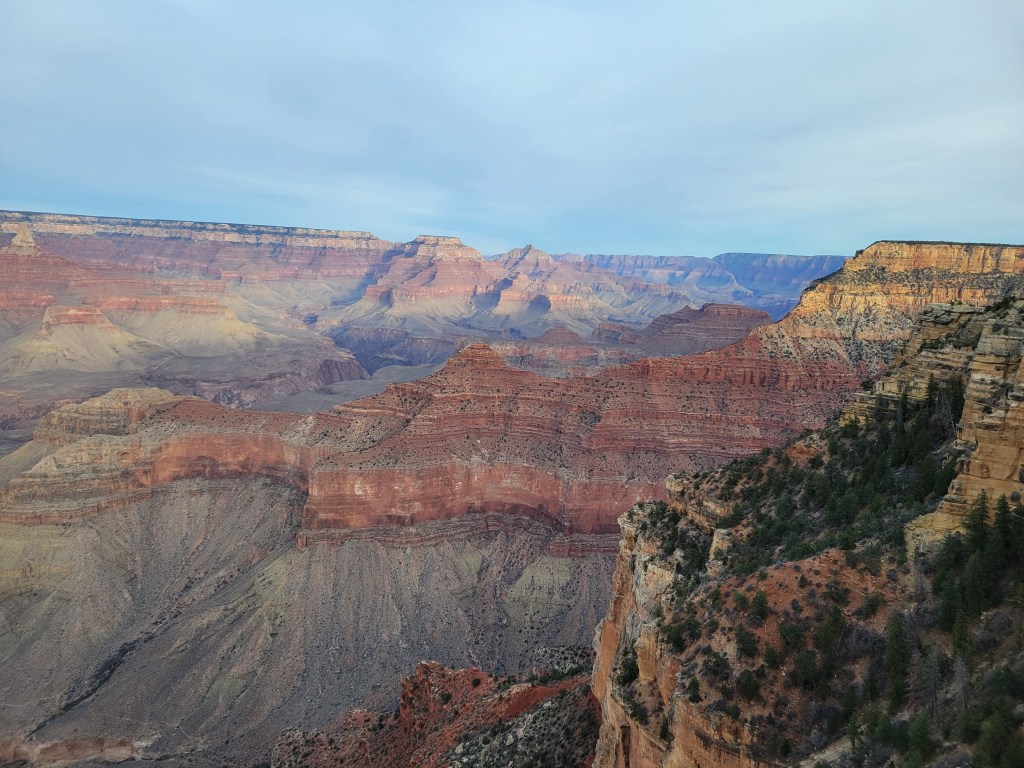
After having our minds blown and our spirits enriched by the splendor of the Grand Canyon, we found ourselves laughing thinking about a few quick localized myths that involve the Grand Canyon, both of which we thought it would be fun to dispel with righteous indignance.
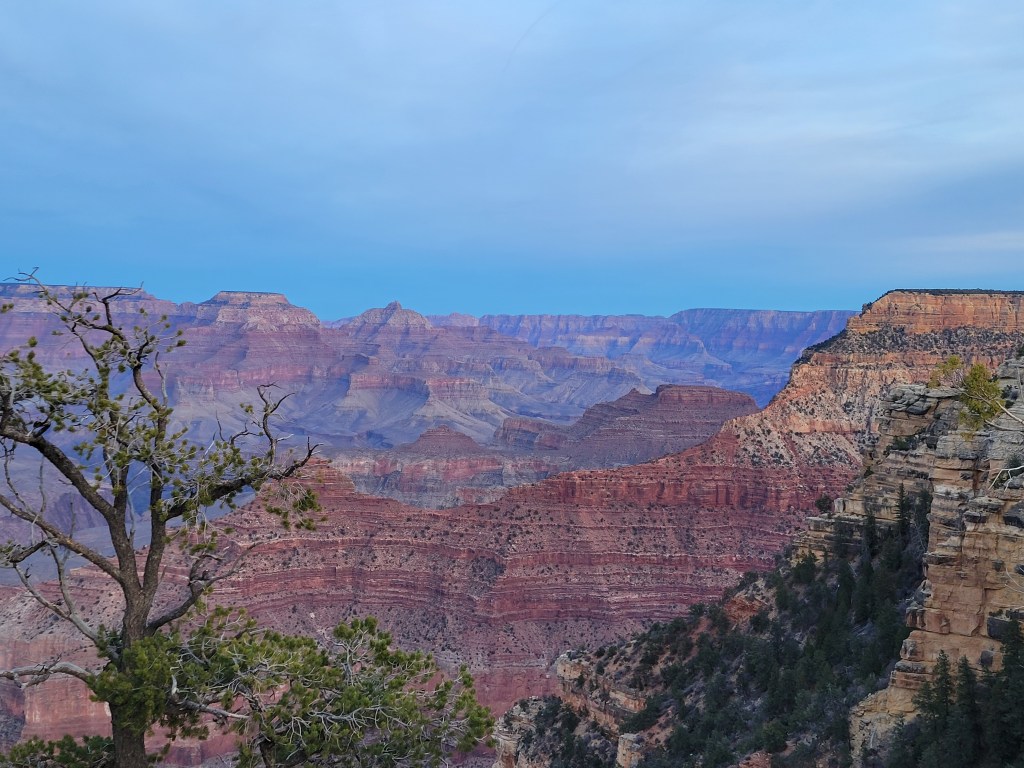
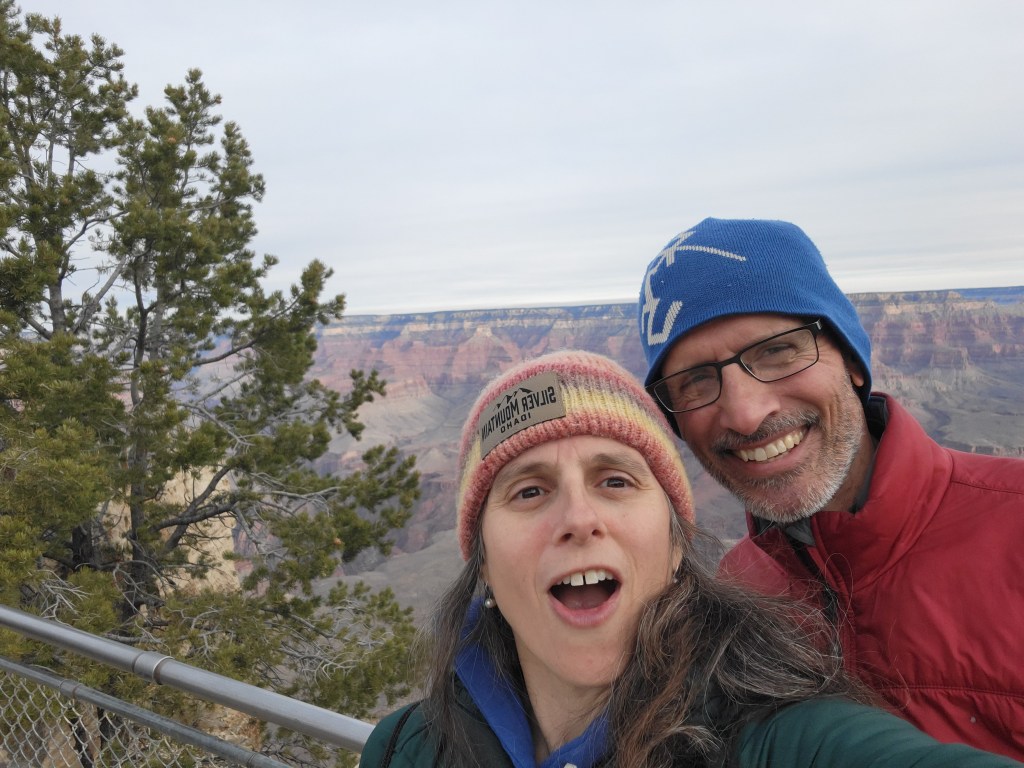
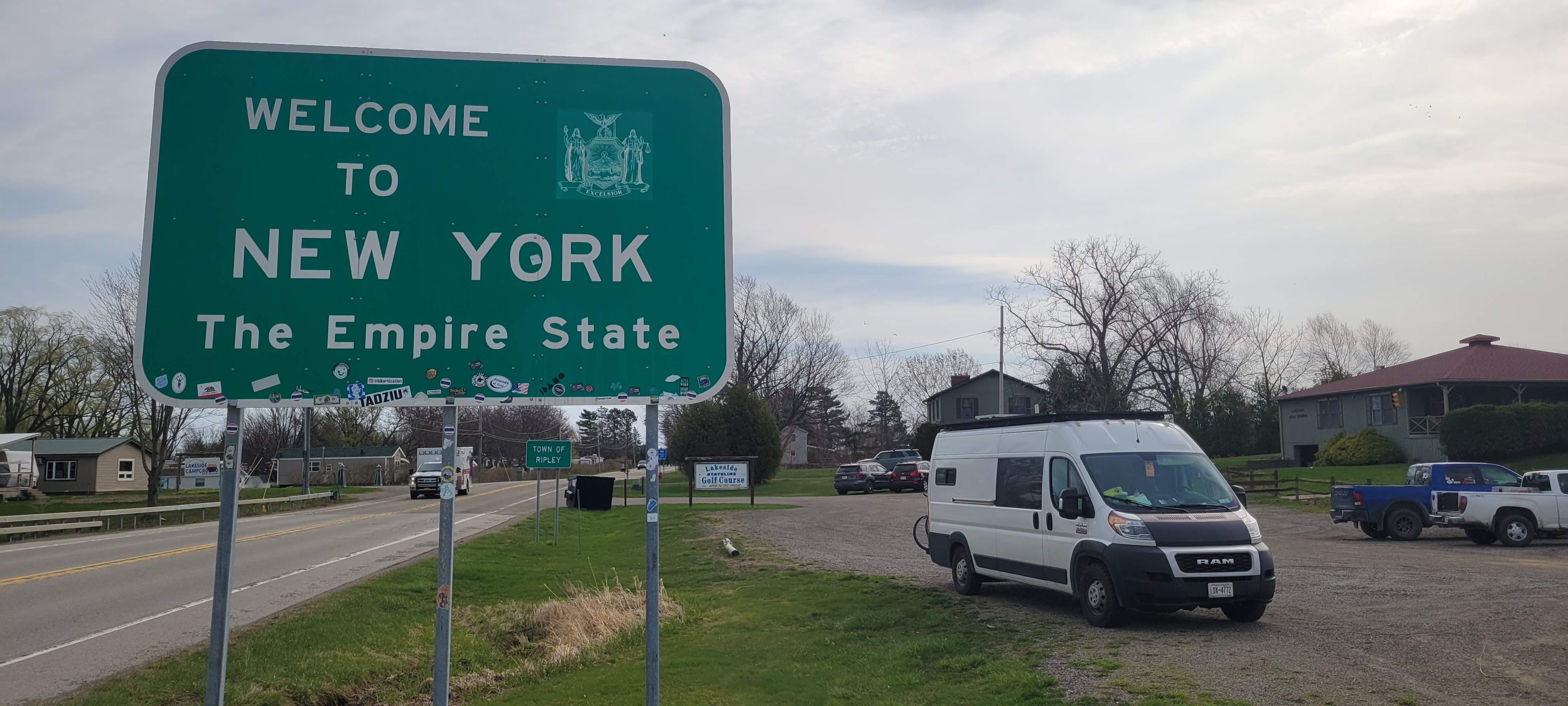
The first is a myth we have heard a couple of times on our trip when the topic of the Grand Canyon came up. Once from someone we met in Alaska who was bragging about Alaska’s beauty (no arguments on that point) and another from a local Phoenician who told us about how, just like every other state that has world famous sites that people travel thousands of miles to come see to check off their bucket list, there are TONS of people that are born and raised in Arizona that have never been to the Grand Canyon. We, being from Rochester, NY, know this phenomenon well. We live 1.5 hours from one of the great wonders of the world, Niagara Falls, and we both know many, many people that have never made the drive. So it goes in Arizona. The gentleman we were talking with was one such person, born and raised in Phoenix and never having stood at his home state’s famous canyon’s edge.
When we inquired further about why, we heard that comment again, “It’s just a big hole, anyways.”
Myth #1: The Grand Canyon is “just a big hole”
Let us be clear, the words “just”, “big” and “hole” all belong nowhere in the description of the Grand Canyon. If someone actually goes to the Grand Canyon, stands at its edge WITH THEIR EYES OPEN and finds any of those words to be fitting of what they are looking at, gosh, we don’t know what to tell you – there may be an entire part of your brain that is dormant. You might want to get that checked out.
The Grand Canyon is not big. It’s grand. That is why it is called The Grand Canyon and not The Big Canyon. And there is most definitely a difference.
Let’s give this a little context. On our trip, we have been blessed to see many big things, some of the world’s largest things even. We’ve seen the world’s largest ball of twine created by the hands of one person. We’ve seen the world’s largest burger frying pan. We know, at this point, the jealousy must be building. Well, wait for it. We’ve also seen the world’s largest potato masher in Plover, WI. And, it was indeed glorious. Standing at 40 feet tall, necessitating us to crane our heads to full tilt, it was a site to behold. That was big.
Well, it would take 259 MILLION, that’s 259,000,000 of the world’s largest potato mashers JUST to make a LID to cover the Grand Canyon. We don’t even want to think about how many of the world’s largest potato mashers it would take to fill in the 127 TRILLION cubic feet that make up the volume of the Grand Canyon.
So, yea, its a little bigger than big.
Then there’s that word that is supposed to sound so boring – hole. It’s just a “big hole”. And, who would want to see a big hole? Well, we would. Seeing a big hole actually sounds pretty neat and, actually, we have seen one and it was pretty neat. For anyone that has ever visited a crater (we missed Meteor Crater in Arizona, but we’ve seen the crater in Hawaii), it’s actually pretty cool, walking around the rim, looking at the big hole below. Craters are very truly “big holes”. Absolutely. And they are definitely worth seeing.
The coolest and most mysterious phenomenon in the Universe is arguably a black hole. A black hole is not even a real hole. It is matter so dense that the force of gravity is so strong that not even light can escape. How cool is that?! And the word that was thought to be cool and mysterious enough to encapsulate something that amazing, is the word “hole”. So, even though the Grand Canyon is anything but a big hole, a big hole is still something cool enough to want to see.
So even though a big hole would be worth seeing, the Grand Canyon is most definitely not a hole. No, the Grand Canyon is, well, it’s conveniently right there in the name – a canyon. And while a canyon describes something that includes the space in between other massive things, and a contained bit of empty space is part of what makes a hole a hole, a canyon is not a hole. It is a canyon. A canyon is a deep, narrow valley with steep sides that has been carved into the earth’s surface by erosion over time. It actually comes from the Spanish word cañon, which means tube or pipe. If you want to call it an incomprehensibly large open tube, fine, go ahead – even though that doesn’t even come close to describing what you’ll see when you look at it either. And you show us one person that wouldn’t want to see an incomprehensibly large open tube.
Calling the Grand Canyon “just a big hole” is like calling Mount Everest ”just a pile of rock and dirt…with a little bit of snow on top”. It’s not entirely inaccurate in a certain respect. Mount Everest is kind of shaped like a pile, and it is made up of rock and dirt and topped with snow. It is completely inaccurate, however, to the spirit of what it is and to the reality of what it is. And, then there’s the fact that, geologically speaking, it would actually be completely inaccurate to call Mount Everest a pile of rock and dirt, just like it is geologically completely inaccurate to call the Grand Canyon a hole. Mount Everest is no more the result of the giant at the top of Jack’s beanstalk piling up dirt with his giant shovel, than the Grand Canyon is the hole that he dug that pile of dirt out of. Both the Grand Canyon and Mount Everest alike are the result of the wonders of geology over the course of not decades, not centuries, not even millenia. In the case of the Grand Canyon it is a story that plays out over 3+ BILLION years. And, when we put that little plus sign after the three, that doesn’t mean, add a few extra years, it means, add a handful of hundreds of millions of extra years. When you look at the Grand Canyon, you are seeing the story of what happens when wind, water and rock encounter time at this incomprehensible scale of billions. This is a concept that the human mind cannot even begin to entertain. We are taking scales of time that humans cannot even really think about thinking about without blowing a fuse. And, perhaps, that is why some might prefer to minimize it to something as approachable and seemingly umimportant as the idea of just a big hole, then one wouldn’t need to even try.
But, we do recommend giving it a go. Opening your mind and your heart to the reality of how very teeny tiny small we are can be refreshing and cleansing to the soul. It is worth it to open your eyes and look at something that is not only aesthetically beautiful, but is so much bigger in space and time than our teeny little human brains could ever hope to grasp. And what could be more grand than a canyon that can give you that.
Then, we can turn our attention to myth number two – the exact opposite phenomenon. That of, not attempting to minimize the grandness of the Grand Canyon in order to make it less imposing or spectacular, but the attempt to aggrandize something that is simply not as grand. We are looking at you, New York, our home state.
Myth #2: Letchworth State Park is the Grand Canyon of the east
How do we debunk this one? Well, no. Just no.
Sorry Letchworth. We love you. You are beautiful and you have every right to be a pride and joy for us New Yorkers, especially us western New Yorkers. Letchworth State Park is one of the most beautiful state parks in the country and more than worth a visit and we are proud to have it in our backyard.
But let’s call a spade a spade and a Letchworth a Letchworth.
And, technically, Letchworth isn’t even a canyon. It’s a gorge. Do you know what makes something a gorge rather than a canyon? Its size. Letchworth is not even big enough to be called a canyon let alone be the east coast representative of the biggest canyon that there is.
We have seen a lot of canyons out here during our adventures west. Each has been stunning. And, there is not a single one that we have looked at and thought, you know what that reminds me of? No. Even the Canyon de Chelly that is staggering and enormous in its own right, despite being scales and scales and scales smaller than the Grand Canyon – when we saw it, there was not a cell in our bodies that felt a nostalgia for its VERY distant relative back home.
Let’s give a little context to this one. Letchworth is 17 miles long. That’s a pretty good distance for a gorge. Next to the Grand Canyon, it is downright adorable. The Grand Canyon, at its widest point is18 miles wide. So, the entirety of Letchworth couldn’t even serve as a bridge from one rim of the Grand Canyon to the other at its widest point (though it could at many other points that range between 1 and 18 miles wide). On the other hand, if you were to leave Letchworth State Park and drive just 27 miles shy of New York City, which for those of you that don’t know New York State geography, means driving 277 miles, you would have traveled the length of the Grand Canyon. So, yea, a little different.
The comparison is a little like saying that Julie’s feet are the Shaquille O’Neal feet of non-basketball players. They are both sets of feet, but that’s where the similarities end. For anyone that doesn’t know Julie, she has very, very small feet. For anyone that doesn’t know Shaquille O’Neal, come on.
During Ryan’s trip out west back in 1997, when he first saw the Grand Canyon, his heart full of fond memories of Letchworth after growing up spending a couple of weeks each summer for four or five summers in a row delighting in the joys of beauty and play at what he had grown up thinking was the Grand Canyon of the East, when he reached the rim of the Grand Canyon of the West, aka The Grand Canyon, his first thought was, “nope”. He wrote in his journal back then. “Letchworth hails itself as the Grand Canyon of the east. That claim is nothing more than a paltry attempt at splendor by association”
Perhaps harsh, but wholly true.
Don’t get us wrong, Letchworth is great. We have no problems with it. We love it. However, we are just talking about a little truth in advertising. And, Letchworth, you don’t need to compare yourself to anyone else. You just be you. We love you just the way you are. And the way you are, is pretty much NOTHING like the Grand Canyon with the exceptions of some similarities that hold up mostly on paper, both being the basic shape of a valley between two steep cliff walls with water running somewhere through. That’s where the similarities end.
No one goes to the Grand Canyon and comes away calling it the Letchworth Gorge of the west and its time that folks face the music and come clean about calling Letchworth the Grand Canyon of the East.
So, with both myths self-righteously busted, we make a plea to the human tendency towards over-minimization and over-aggrandization, to let go your grip of the Grand Canyon. Let it be what it is. Let’s let everything be exactly what it is and find the beauty in it however grand and spectacular it may or may not be. Beauty does not care about size, nor splendor. It cares about authenticity and the willingness to notice it wherever it may be hiding, for being just what it is, no more and no less.


Leave a Reply