Los Alamos is a town that is filled with a lot of smart people. You can’t walk 200 yards without tripping over a nuclear physicist or an electrical engineer. We met one of each in our short time in the city that changed the landscape of humanity and the world.
For those that aren’t familiar with the history or didn’t get caught up in last summer’s Barbenheimer phenomenon, Los Alamos, formerly 40 miles of mostly canyonland that had consisted of a handful of homesteaders, a boy’s boarding school for the well-to-do and the sacred ancient burial sites of the Pueblo Indians that had lived there centuries earlier, became among the most quickly and deliberately built towns in the country in order to house the scientists and their families that would make up the Manhattan Project. Like every other piece of America that had once been home to different peoples and cultures before it was settled for the purposes of those that newly settled there, the Manhattan Project overtook the area almost completely and what remains is a town built completely around the Los Alamos National Laboratory that had it roots in that Herculean effort. For those that don’t know what the Manhattan Project is, that is where the renowned physicist J. Robert Oppenheimer and General Leslie Groves spear-headed the project to build the first nuclear bomb and to do so before the Nazis accomplished the same feat.

It is an effort in intelligence, focus and collaboration that is almost impossible to fully comprehend its scale and how remarkable it is that they managed to pull it off, let alone to do so in the 28 months they did it in. It is also an effort that is almost impossible to fully wrap one’s mind around the intensity, impact and implications for humanity. The work done in this town led to two atomic bombs dropping on cities in Japan – a horror that is equally incomprehensible in scope and also led to the end of a war with Japan that was also incomprehensibly violent and deadly. The work done in this town also led the world to the brink of self-destruction as the Cold War unfolded for decades afterwards. And, in a world where war has the potential to destroy everyone and everything, it also put a stop to the seizure of global warring that had consumed the world for the better part of the first half of the twentieth century.
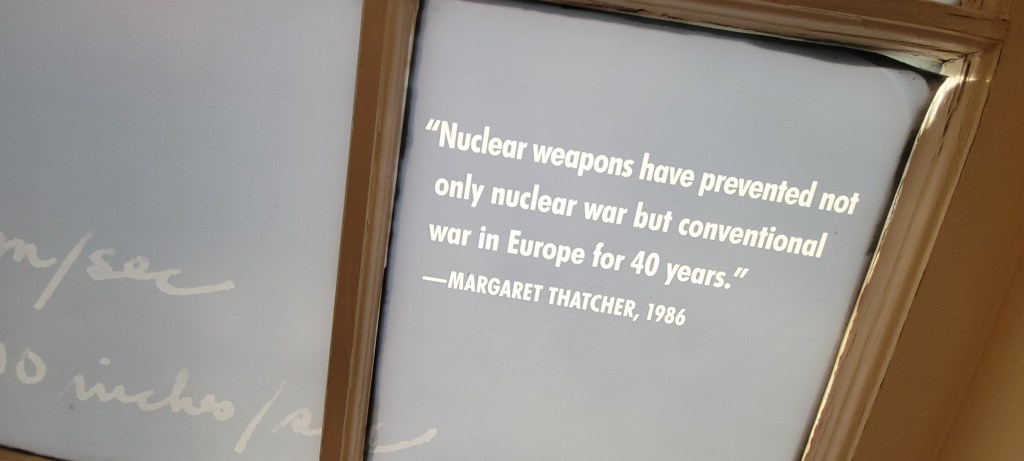
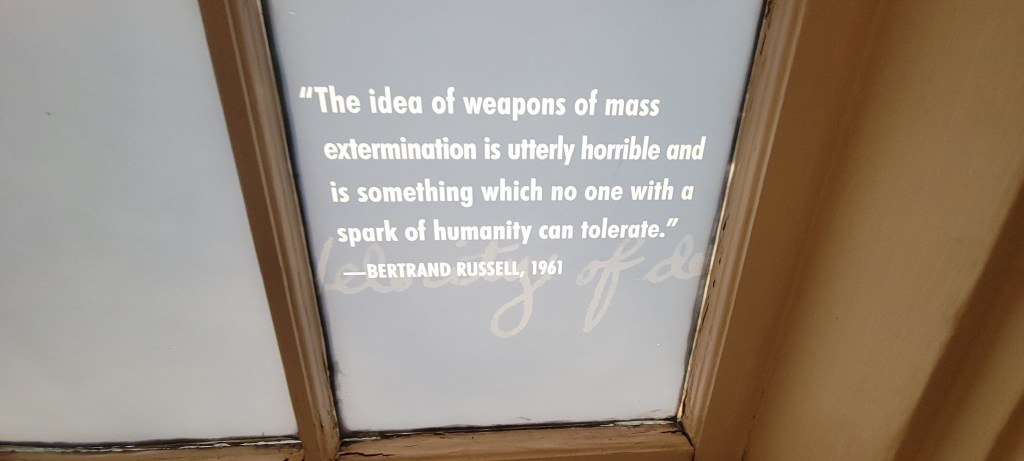
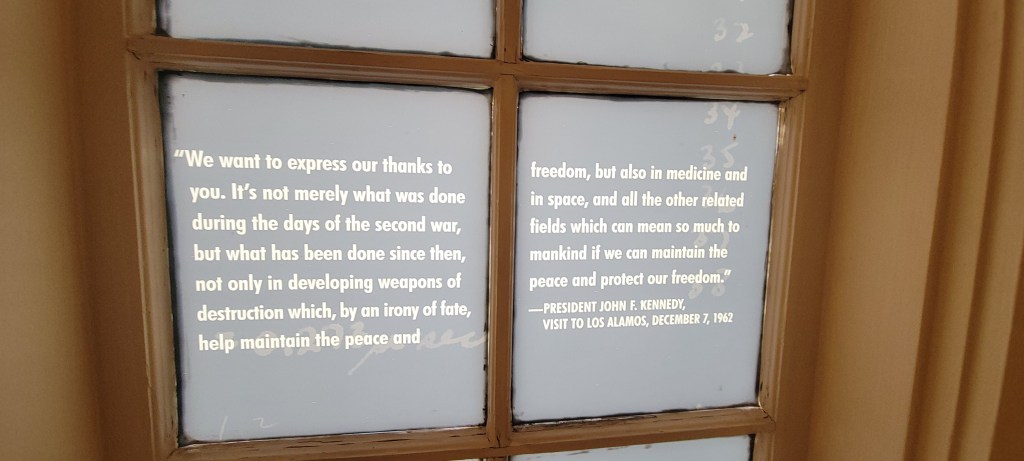
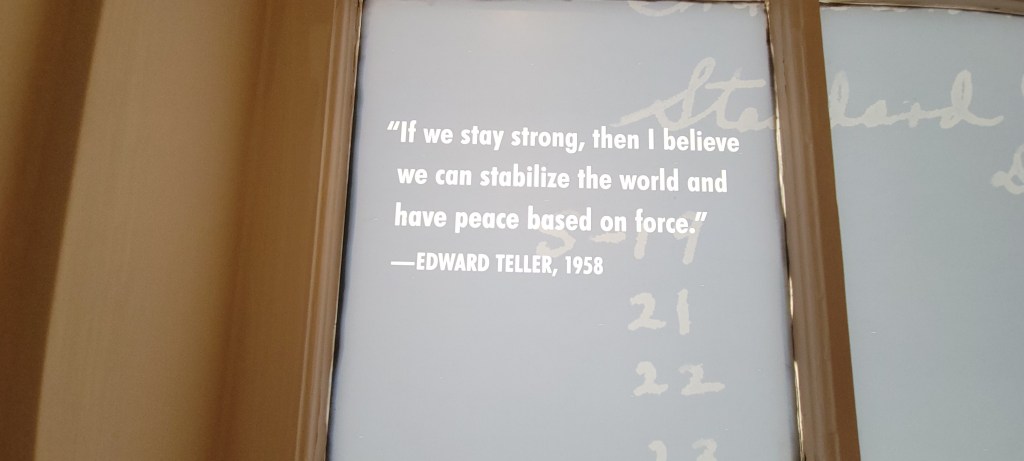
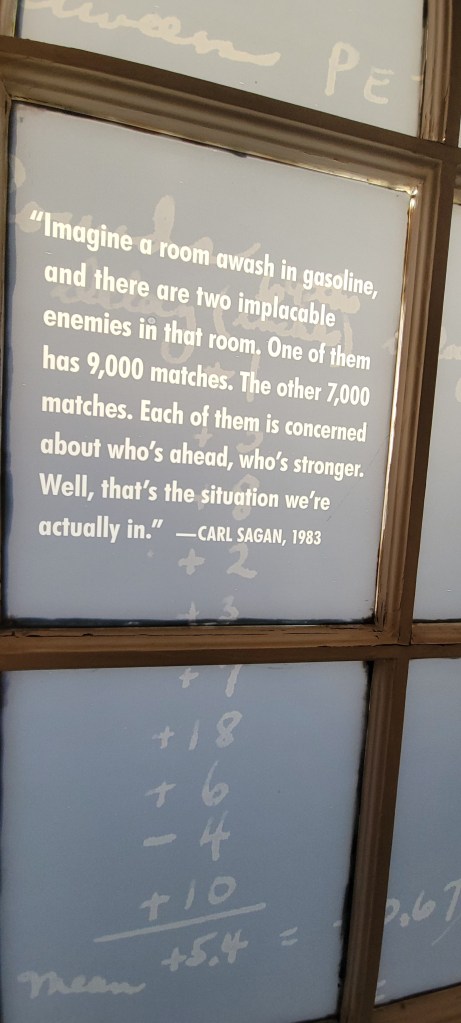
Somehow, Los Alamos continues to thrive as a town that carries the pride of accomplishment and the weight of its moral implications in delicate balance while also just going about living their lives in a beautiful spot amidst New Mexico’s valleys and canyons.
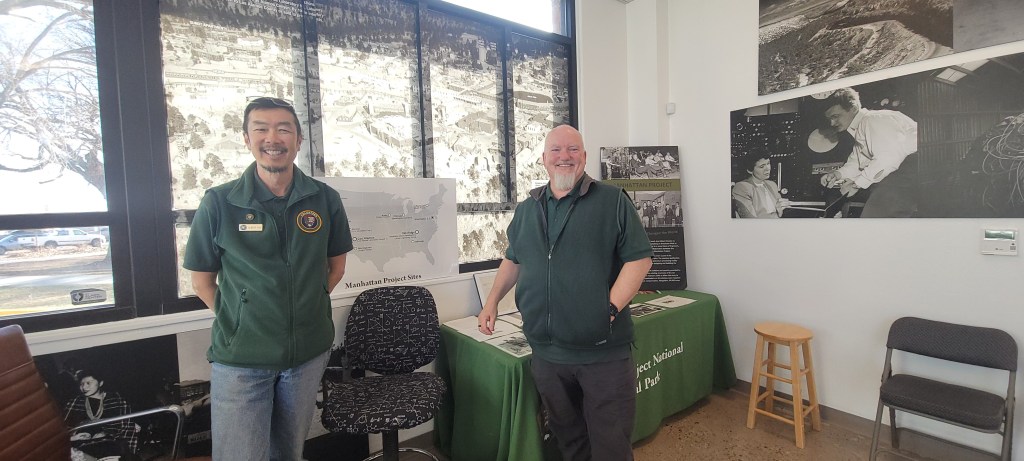
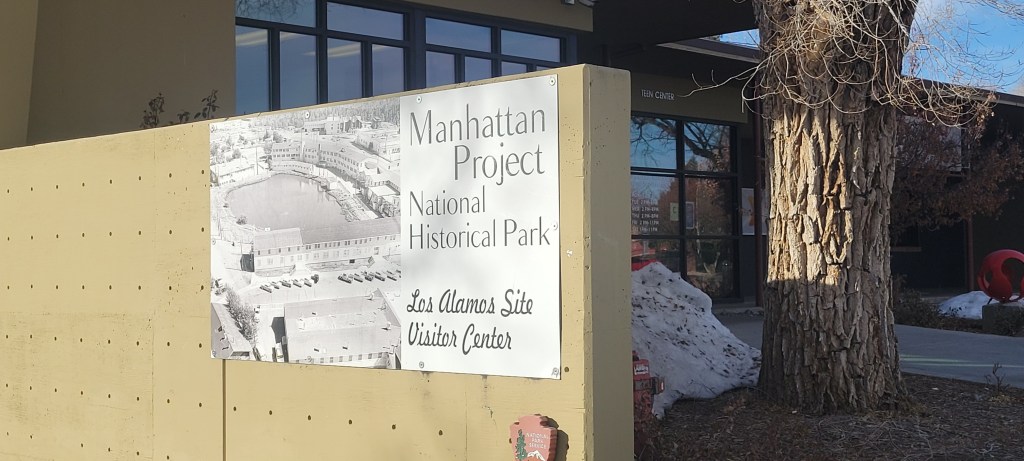
We met a handful of the locals in our quick tour of the local sites. Our first stop was the National Park Service visitor center that contained 2 small rooms with plaques and exhibits describing the history, and even more exciting, two volunteers eager to chat and share about the town and its history with us. Albert and Phil were two friendly and completely unassuming volunteers there to welcome visitors and help to satisfy whatever curiosity they might bring. Before long, we learned that they were volunteers that happened to also be retired employees of Los Alamos National Laboratory after 30 years of service as scientists. Phil, a Nuclear and Materials Scientist, and Albert, an Electrical Engineer, were now providing their service as greeters and welcomers to this unassuming little building where massive history was being told. They told us a bit about their jobs – enough for us to realize that we probably needed more schooling just to fully grasp what they were trying to tell us. In short, Albert used to inspect testing sites and Phil inspected nuclear materials.
They told us how Los Alamos had the highest per capital of PhDs of any town and made it clear that the PhDs that made their way here were achievers of the highest order across the board. They had produced, for a small town, a tremendous number of Olympic athletes, accomplished musicians and, well, any other impressive feat you can think of. Not only that, Los Alamos is one of the healthiest towns in the country. People here, they informed us, are fanatic about being healthy.
”Type A is not enough here.” Phil proclaimed.
Julie was feeling quite at home in a place where an insane level of drive and focus was the norm.
Julie exclaimed, “I wonder if I can absorb some of the intelligence in the air by osmosis. I love being around so much good grey matter! ”
“Me too.” Phil commented, acknowledging how great it is, “But it can also be intimidating.”
When the nuclear physicist is intimidated by the crowd, you know you are in good company.
Phil reminded us of our friend Dave from Eldon that we met at the train museum.
”You tell me how much time you have. I have a lot of stories and once I start talking, I don’t really stop.”
We looked over at Albert who nodded in agreement in a way that made it clear Phil was very much telling the truth.
At one point, our attention was drawn to the map on the wall that identified all of the Manhattan Project Sites and we were surprised to see a little circle right below Lake Ontario with a star that said, Rochester, NY.
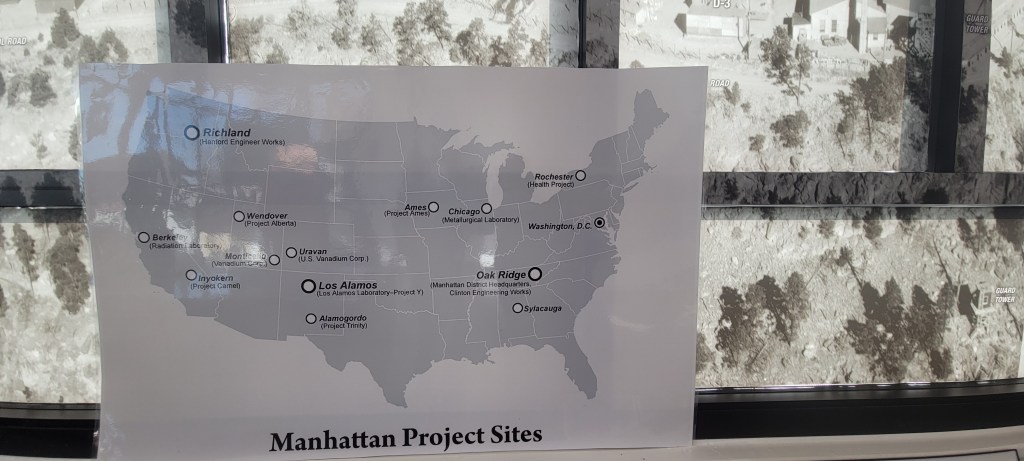
“Hey! That’s where we are from!”
It turns out, the University of Rochester hospital is where the testing was done to find out about the effects of radiation on human health.
We asked Phil about whether the radiation is still affecting New Mexicans. He told us that a lot of the fears about that were hype – even though there are some effects closer to the testing site that are still being understood.
“I can tell you one thing. There is no population more studied than the one right here in Los Alamos. I have given more bodily fluids to the government then you can imagine.”
We decided to skip imagining it, but were fascinated by what Phil had to say about it nonetheless.
One of our favorite moments talking with Phil and Albert, and a National Park Service ranger, Mari, that eventually joined in the conversation, was when we were discussing how White Sands National Park used to be White Sands National Monument.
“What is the difference between a National Park and a National Monument?” Julie inquired.
”It’s a designation.” Phil said.
”What makes the difference between the designations?” Ryan probed further.
After a pause, Phil said, in all seriousness, “What do I know? I’m just a nuclear scientist.”
That’s something you don’t hear often. We laughed and commented on how, generally, people excuse things they don’t know by reminding everyone, hey, I’m no nuclear scientist.
Phil responded, “Understanding nuclear physics – that’s easy. Understanding government – that’s beyond me.”
Point well-taken, Phil.
Julie was a bit in heaven learning about the folks in Los Alamos that loved and practiced science, art, music, athletics and more all at once. Julie was excited to get to say “I study physics…for fun.” In a setting where it was nothing out of the ordinary, rather than an odd confession. Julie didn’t feel so strange to love to study physics, language, write musicals and train for triathlons all as part of one life while in this setting. In this setting, it seemed she’d be the one that folks might think needed to branch out a bit and try her hand in a few more variations of endeavors.
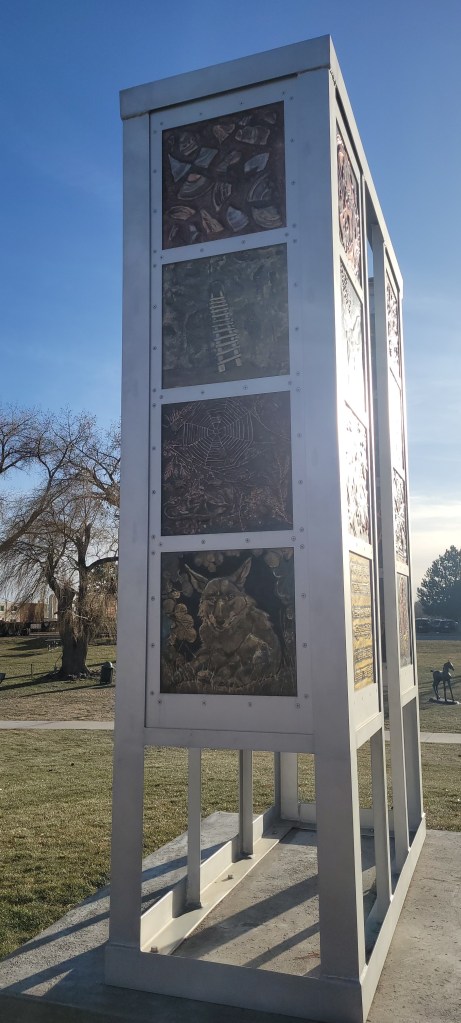
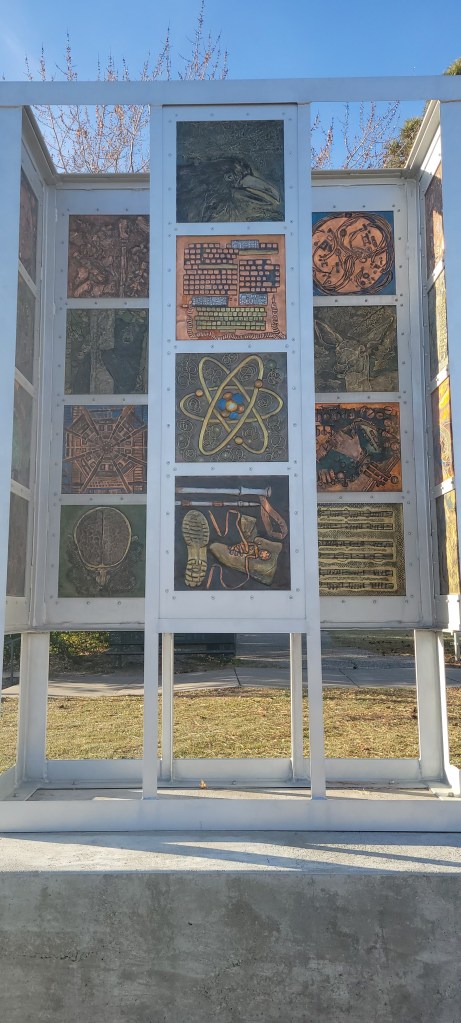

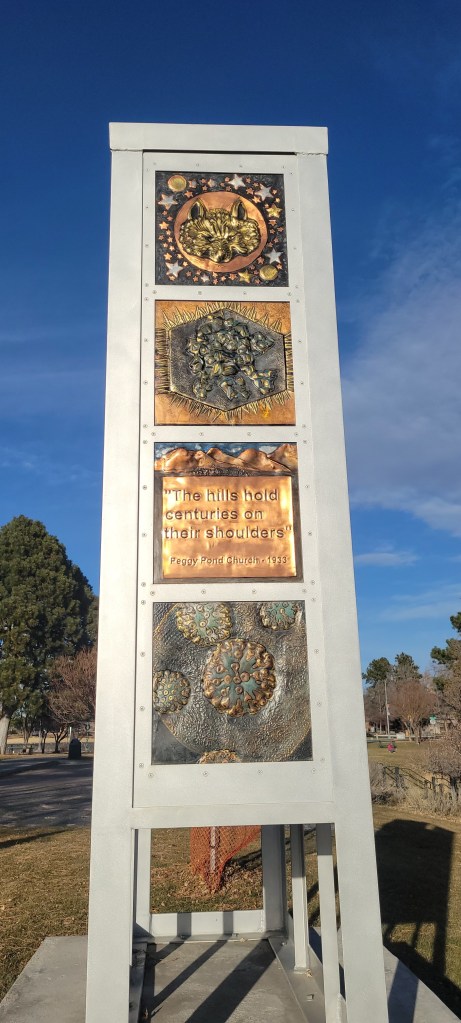
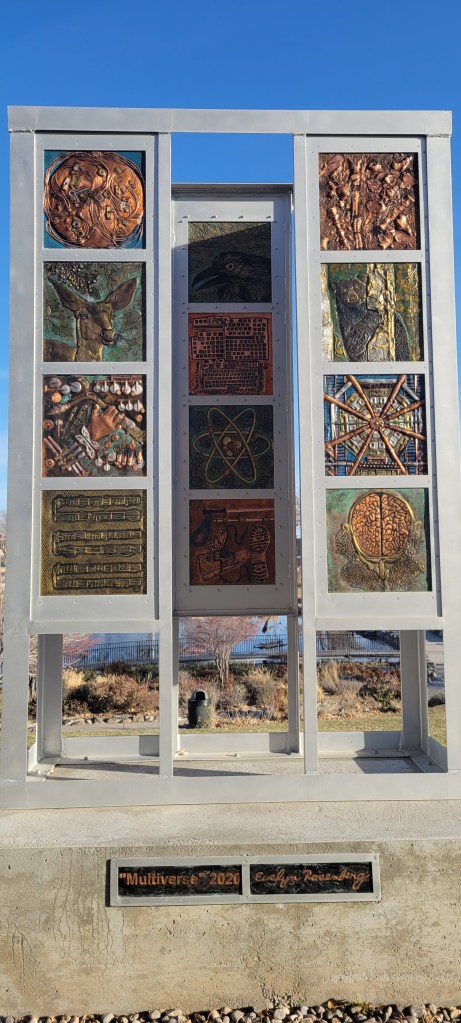
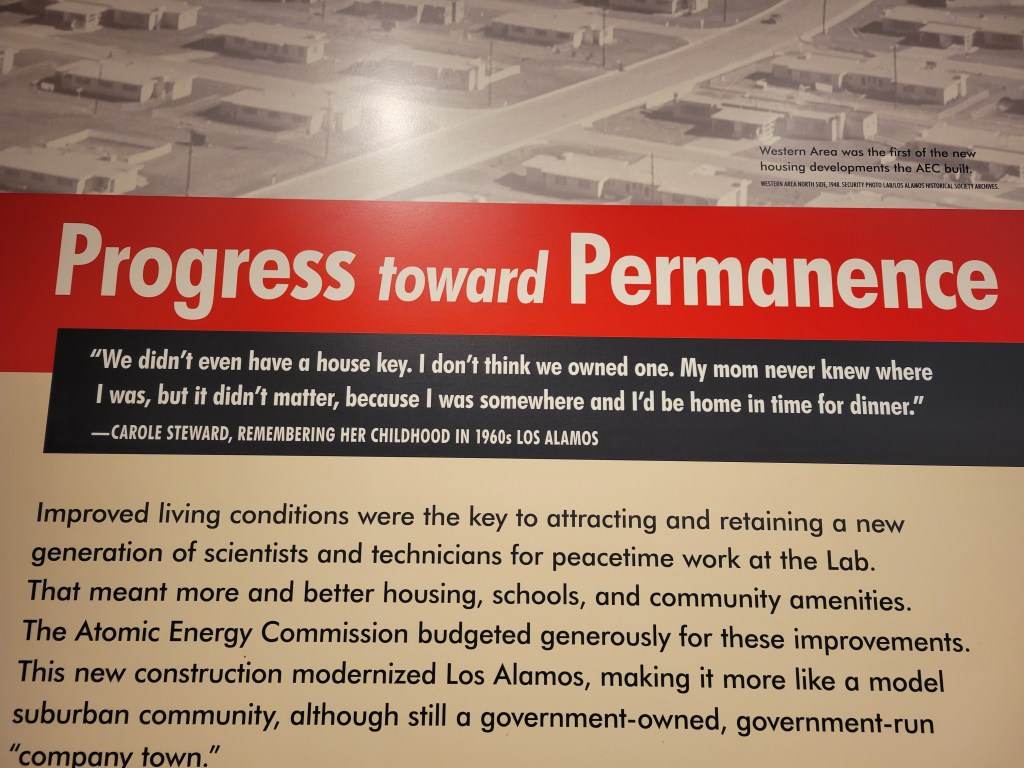
At the same time as we loved touring Los Alamos, we also felt the weight of what it was in world history. We also felt the unique vibe of a city in which, of the 19,000 residents, 17,000 of them worked in the same place. It was, at the same time, a unique town unlike any we’d ever been in, and also just a regular town with parks and restaurants and families growing up in the middle of a beautiful place.
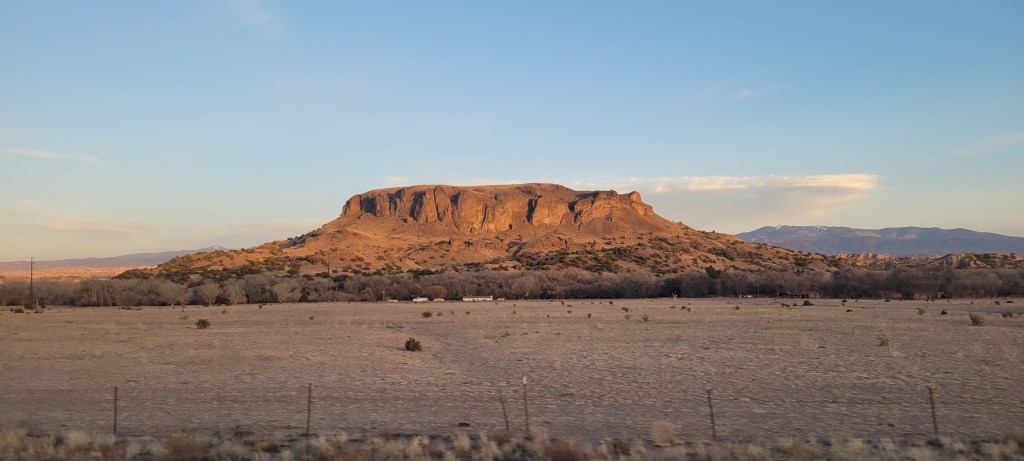
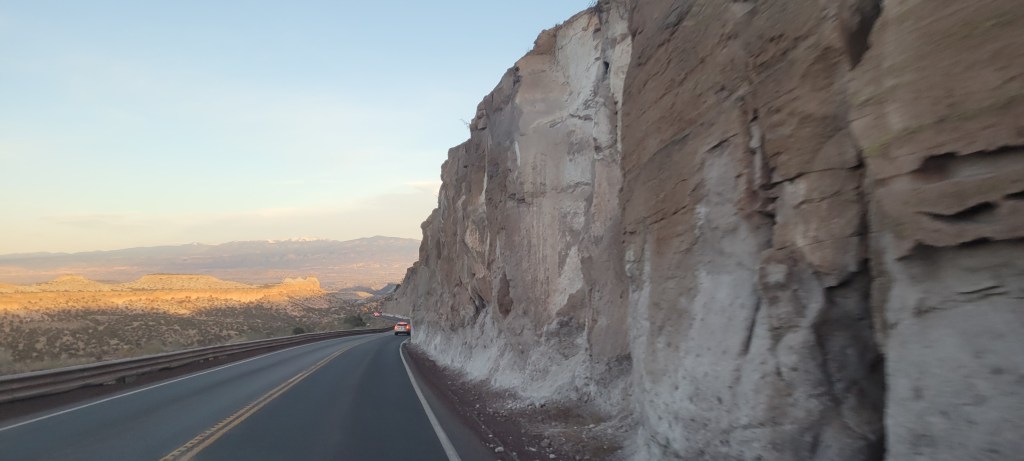
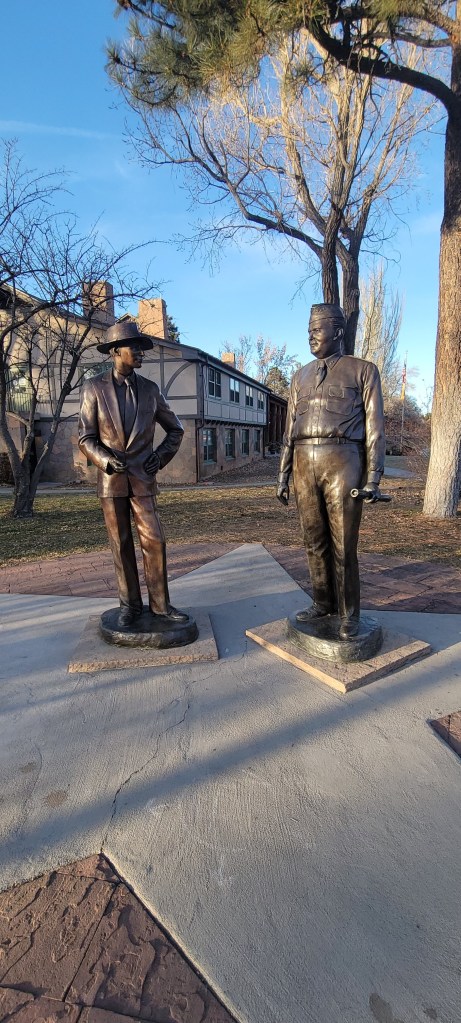
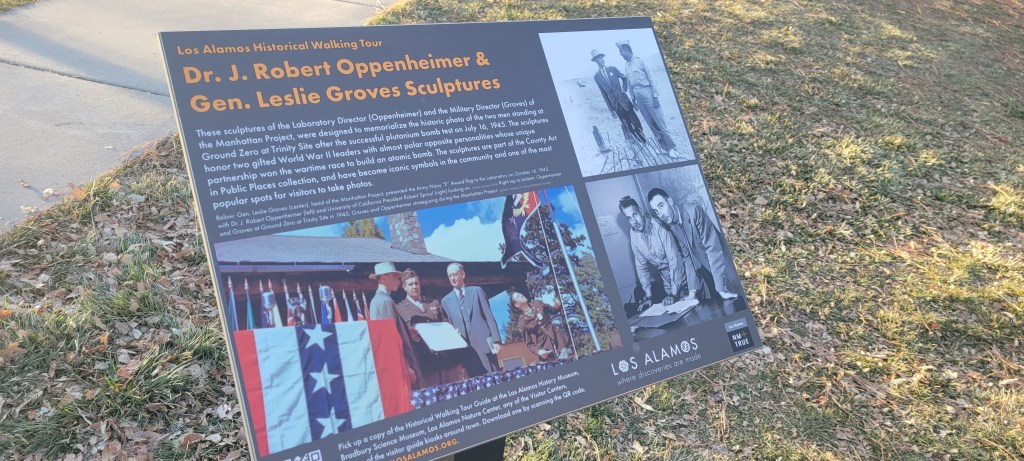
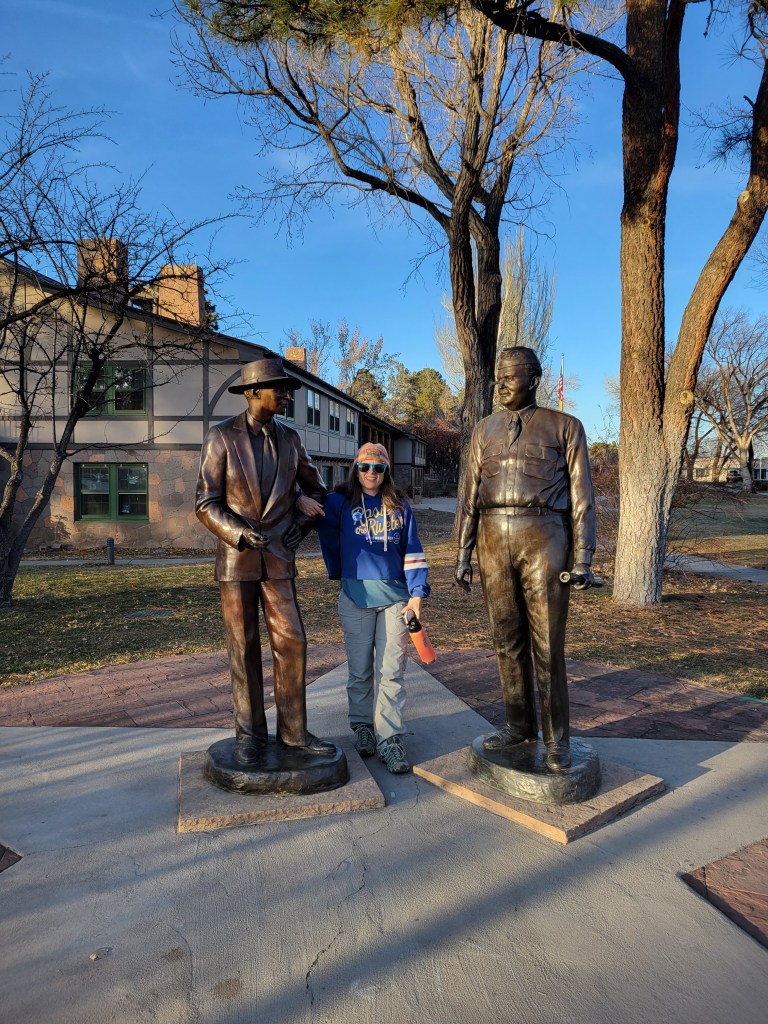
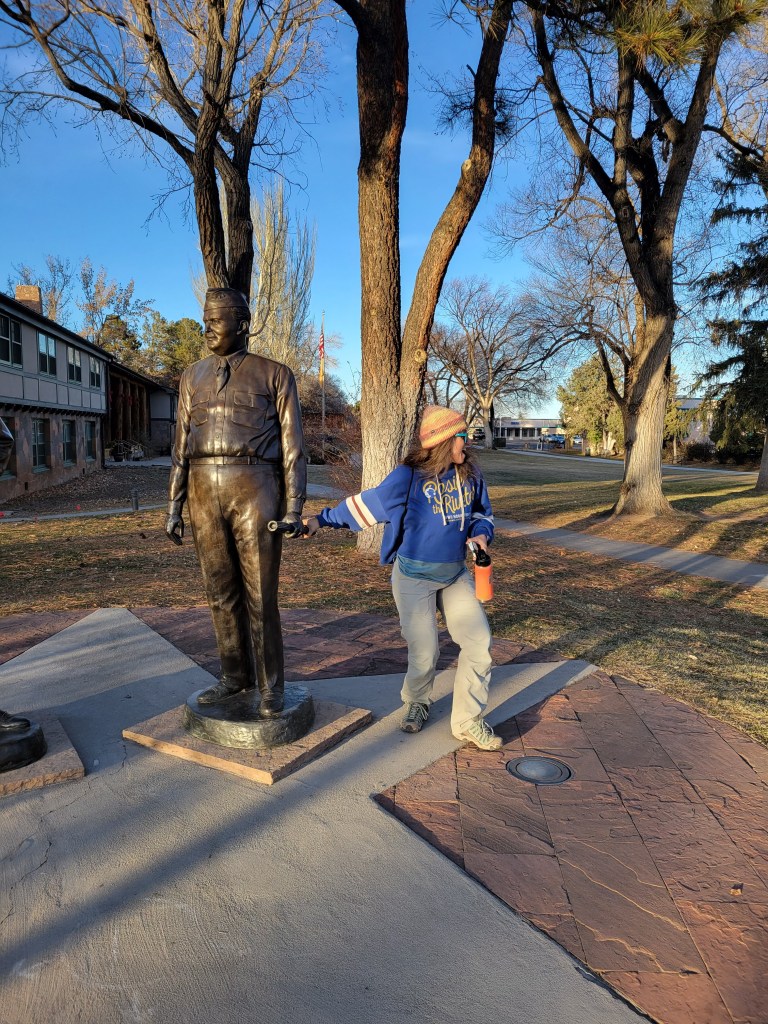
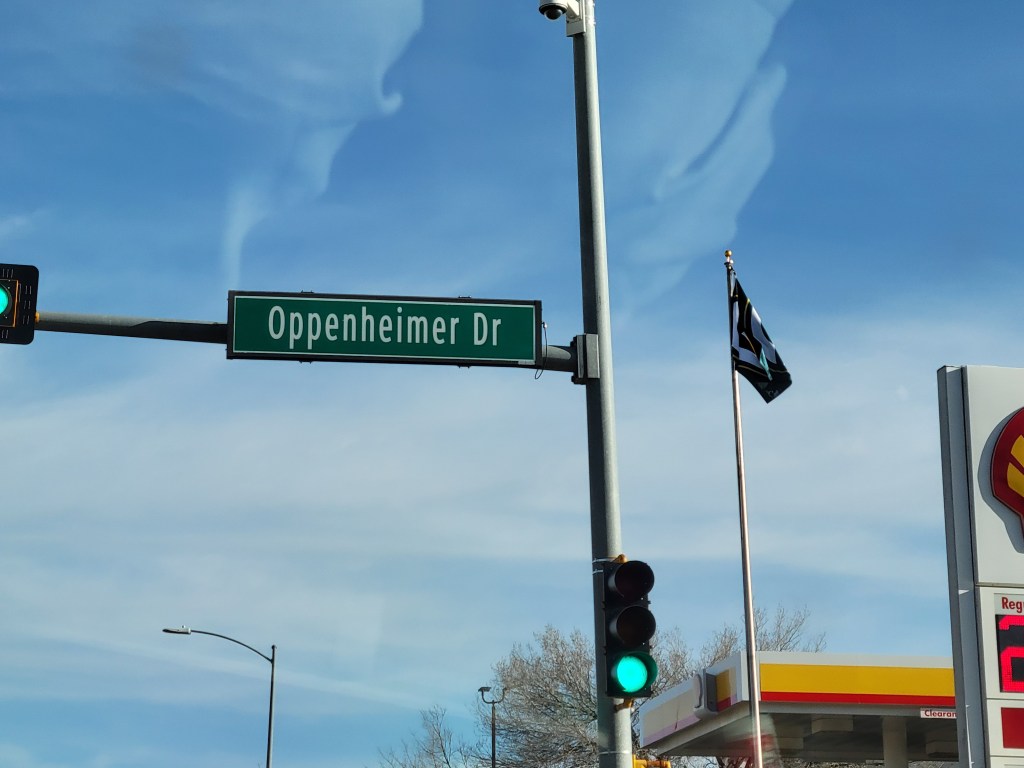
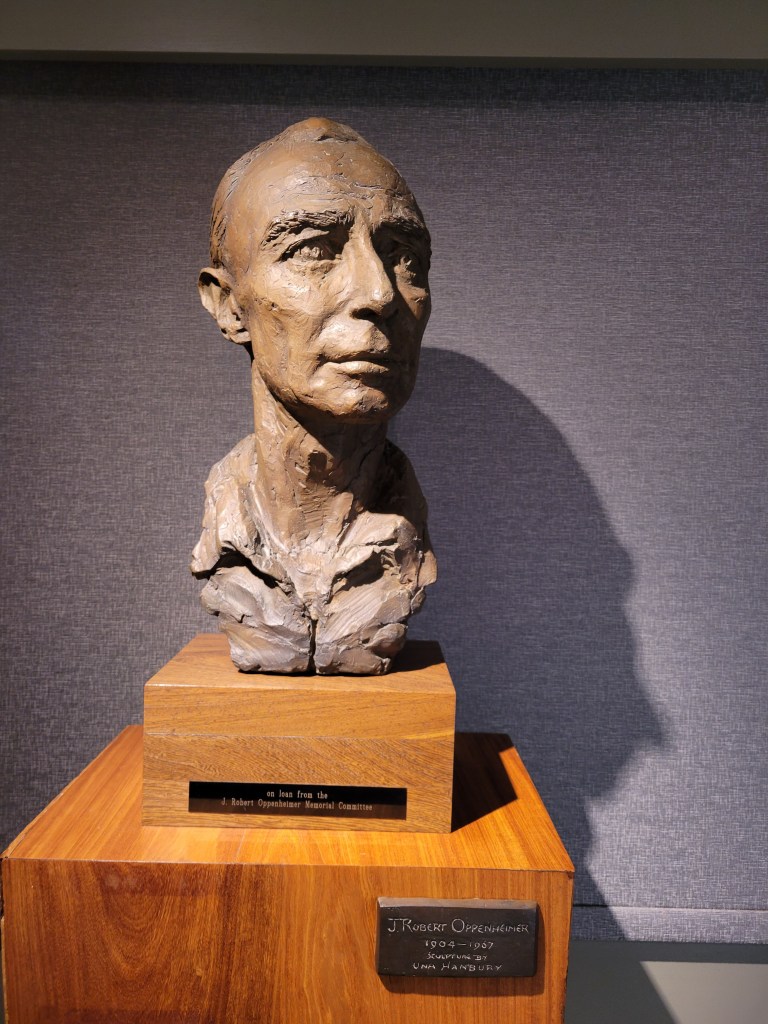
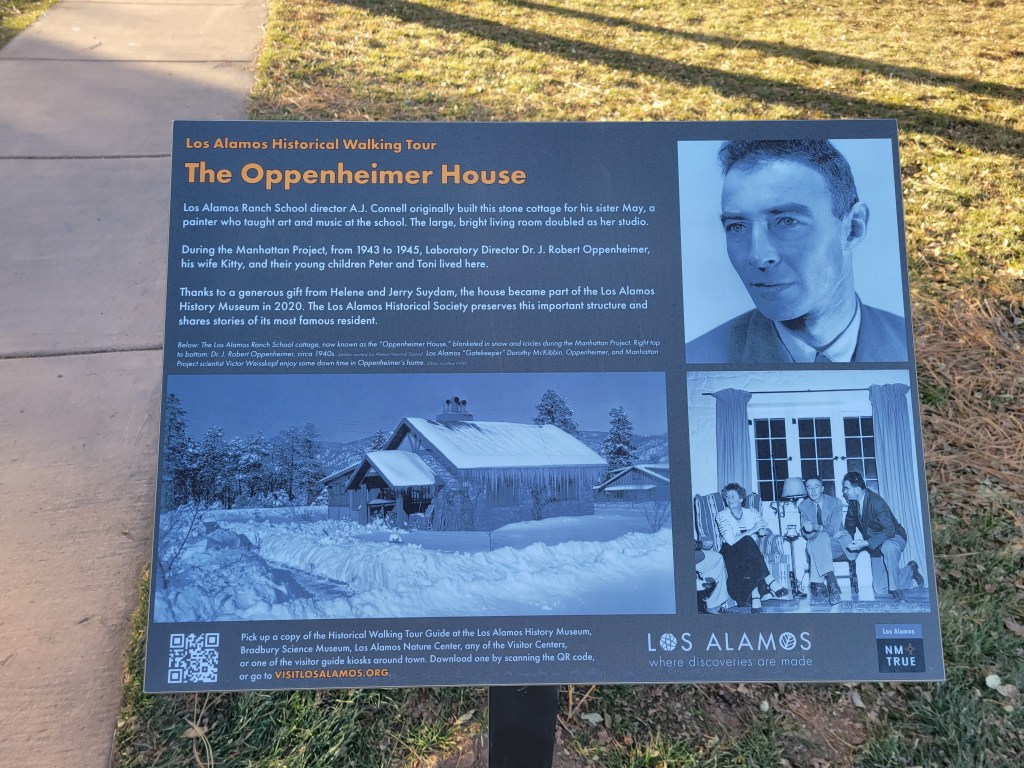
We said goodbye to Phil and Albert and Mari and said hello to the statues of Oppenheimer and Groves. We saw Oppenheimer’s house where they also filmed all of the scenes of Kitty and Oppenheimer in their house for the film and we got the chance to tour Hans Bethe’s house, the German-American physicist that lived and worked alongside Oppenheimer.
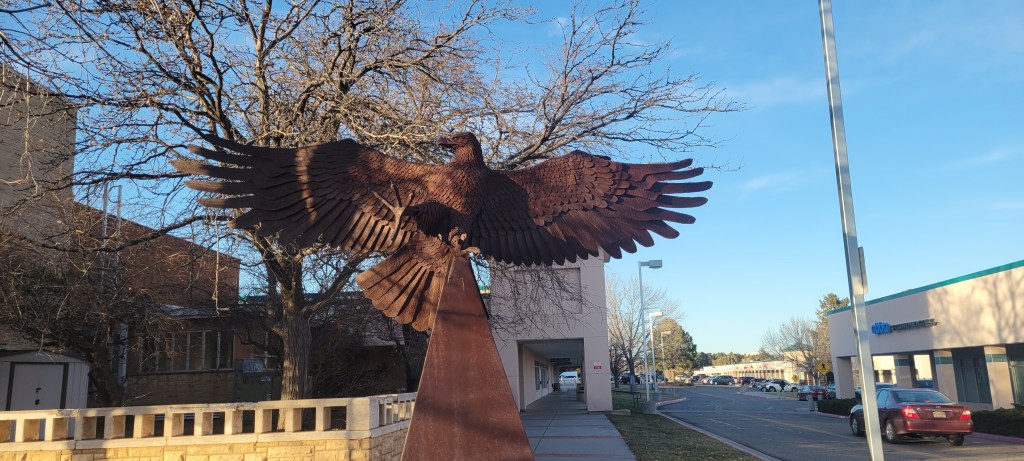
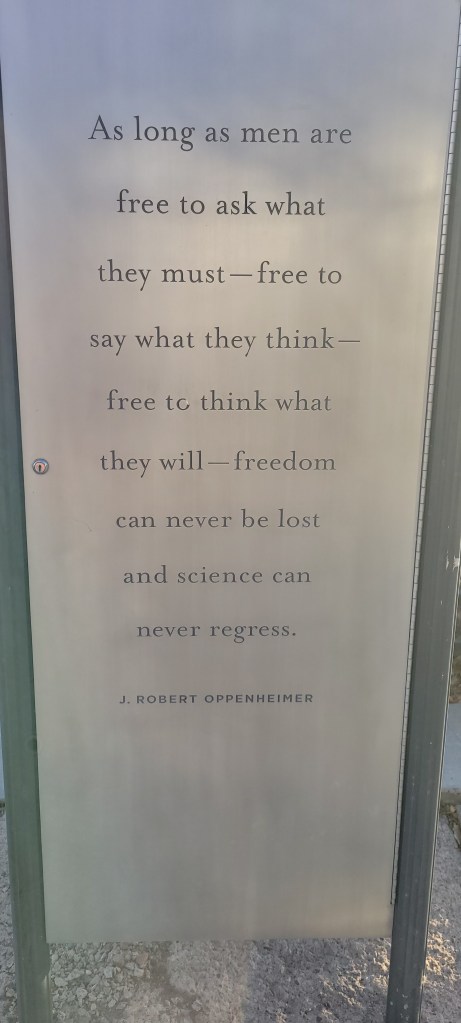





After everything we read, saw and heard, we don’t know if we left Los Alamos any smarter than when we arrived, but we definitely left enriched.


 R and J in the USA
Leave a reply to julieandryan92516 Cancel reply