Devin Mefford loves his hometown – and his passion for it is infectious. He loves its past, is a champion of its present, and is hopeful for its future. His town is Lynch, Kentucky, with a coal-based past, a transitional present, and an uncertain future. Devin loves it all.
Nestled in the Appalachian Mountains of eastern Kentucky just a few miles from the Virginia border, Lynch was once king of the coal mining world. In the 1920s it operated the world’s largest coal camp, had the world’s largest capacity coal tipple, and set the world record for coal production in a single nine-hour shift. The town, which didn’t exist before US Steel created it in 1917 to serve the mine, had a population of 10,000 by the 1940s.
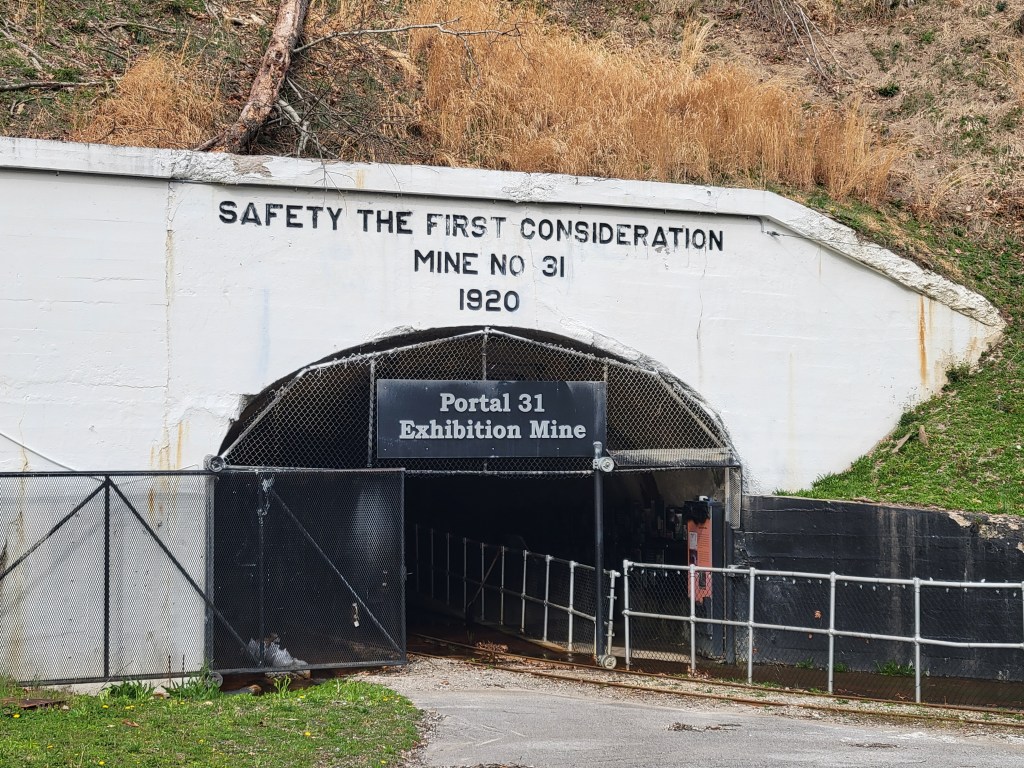
Things have changed since then. Major coal mining operations in Lynch ceased in 1963, and in 1991 what remained stopped completely. By 2020 Lynch’s population was down to about 650 people. Coal’s legacy remained, however, and in 2009 it was rekindled when the Portal 31 mine opened for mine tours. That’s what brought us to Lynch, and that’s where we met the 27-year-old Devin.
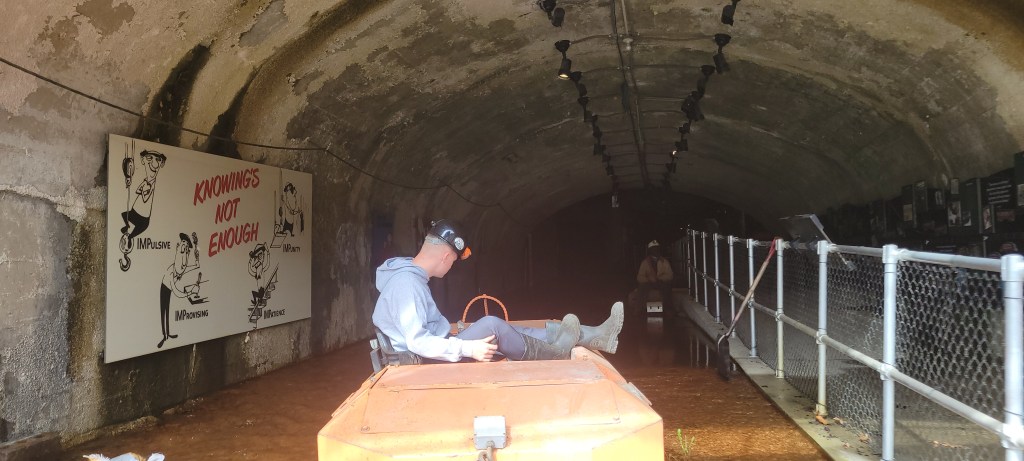
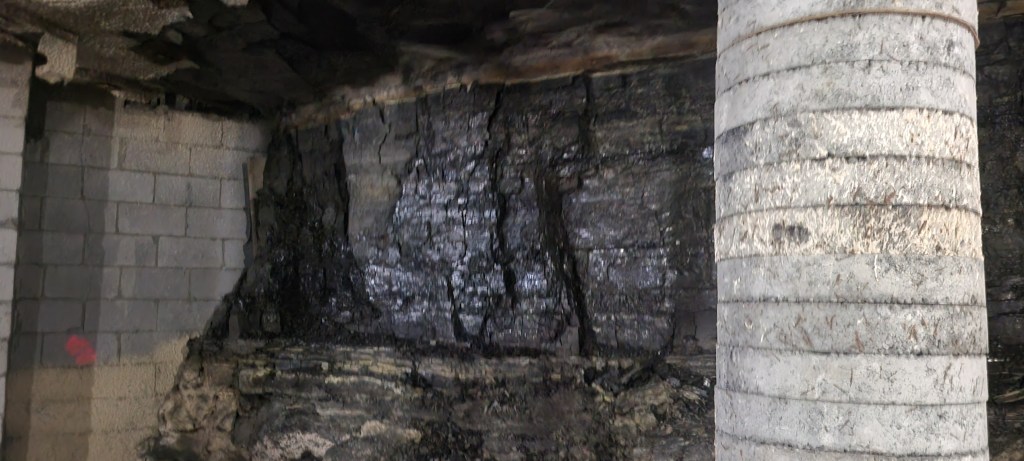
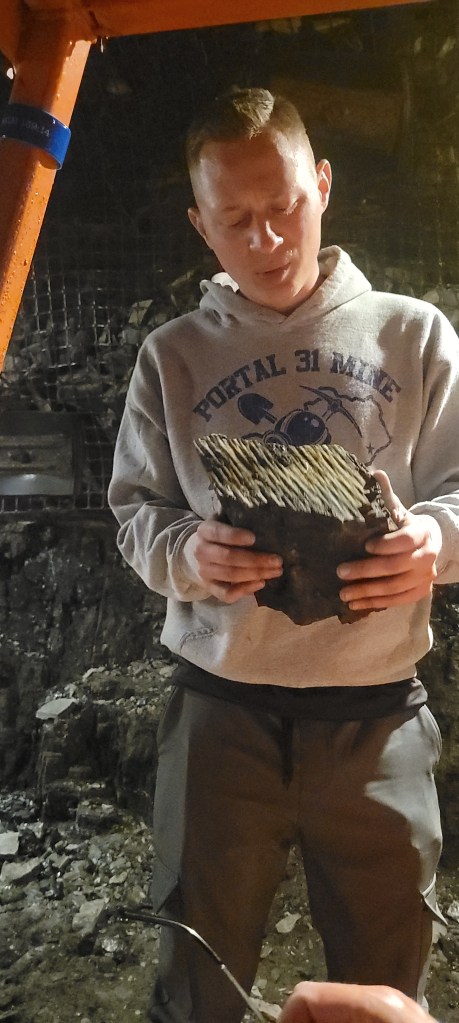
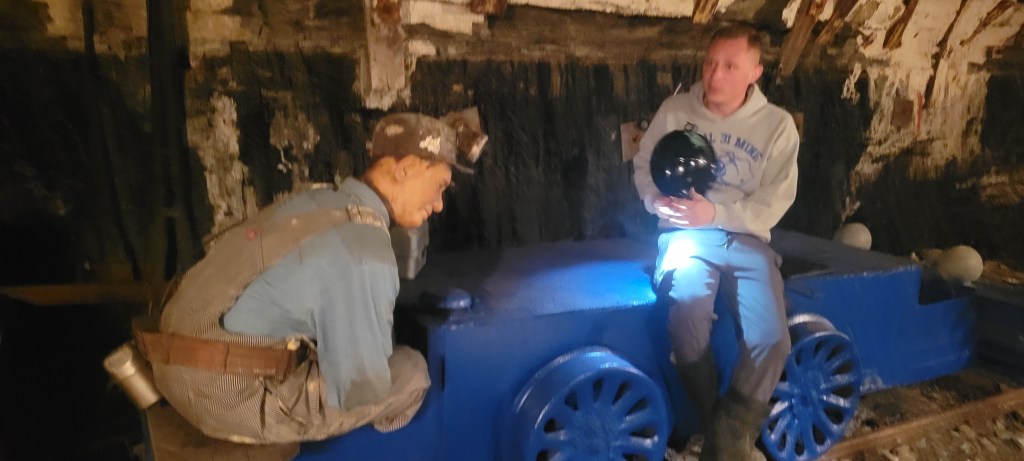
Devin took us into the mine on a low, open-air railcar transport and walked us through some of the Portal 31 tunnels. He told us about the beginning and ending of the mine and all the things in between and downstream. The type of coal they mined. How they mined it. How they processed it. How the town was built for the mine and grew with it. What went on in the town. The melting pot of people who worked in the mines. How this mine and mining town differed from those nearby. He pointed out characteristics within the coal. He told us about how coal formed, the different types of coal, and the type of coal this mine contained. He broke chunks of coal from seams with his bare hands to show us how brittle it was. He pointed out plant fossils in the shale. Through it all he connected the coal with the people and the town with the world.
“All the coal from this mine went to making steel,” Devin said. He told us how that steel was used in for war production in World War I and World War II, as well as for much of the building in America’s 20th century boom. “America doesn’t win World War II without Lynch,” he said. “You watch documentaries like, ‘The Men Who Built America.’ They did, but it wouldn’t have happened without Lynch.”
Devin respect for Lynch’s coal mining history, achievements, and contributions is not coated with a veneer of nostalgia or longing. He knows how hard and dangerous the work was. People died. People were injured. There were low wages, long hours, and debts to the company store. And there was segregation.
“See how that building has two doors?” he asks, pointing to a small, red brick building with two front doors about six feet apart. The building was then and is again now a café. “It’s from segregation. One was for whites. One was for coloreds.”
“And there was a colored school. It’s still standing. And it still says ‘Lynch Colored Public School’ above the door.”
Devin respects Lynch’s history and is grateful for it, while still being mindful of that history’s difficulties. And he is proud of the role it played in shaping 20th century America. He wants people to know it and celebrate it. But he isn’t seeking to live in it or recreate it. His gaze is focused on the future. He talks with enthusiasm about what he would like to see for Lynch, and what he would like to help build. He talks about what could be, rather than lamenting a loss of what was.
Devin went right into the service after high school and served six years. He is now going to college and planning to be an EMT. He will be the first person in his family to graduate college. (Not the first to attend college, but the first to graduate.) He is a proud father of 3 young children. He has been in two movies about coal mining in Lynch. One is a documentary about coal mining. The other is a yet to be released theatrical production about a woman who goes to work in a mine to support her children.
Devin’s passion, positivity, and forward motion belie the challenges he has faced. He grew up in circumstances that would cause many people to buckle or make excuses. He appears to have done neither. As an adult in his early 20s, he took a few steps down a road that caused him problems and could have permanently derailed him, yet he appears to have corrected course. He talks freely about those things positively and matter-of-factly, with no hint of excuse making or self-pity. He is for himself as he is for Lynch – respectful of the past while focused on the future.
As we parted ways, Devin encouraged us to drive around Lynch and get to know it. We asked if he had any recommendations of what to see.
“See it all,” he said. “Drive the main roads. Drive the back roads. Feel the spirit of it. Feel the soul of it.”
Driving through Lynch evokes images of a more prosperous past. People like Devin are focused on a brighter future. Hearing him talk, we can see a glow on the horizon.


Leave a Reply